


The World Bank has approved a major financing package to support India’s rooftop solar programme, including mobilising $4.2 billion in private financing through commercial loans that will help households install rooftop solar systems.
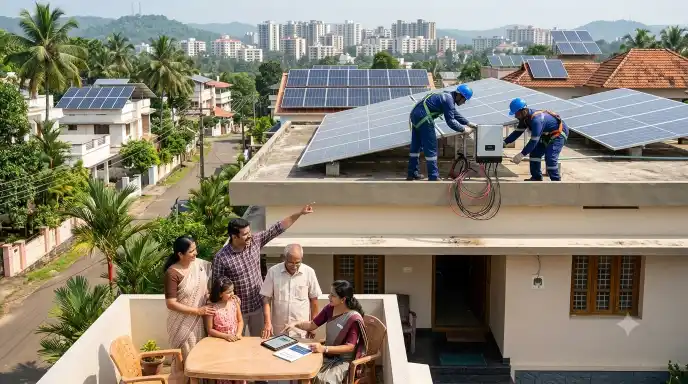
The funding aims to accelerate the PM Surya Ghar: Muft Bijli Yojana, which has already enabled around 4 million rooftop solar installations and is expected to generate 1.7 million jobs across renewable energy manufacturing, installation and related services.
In addition to the private financing, the package includes an $820 million loan from the International Bank for Reconstruction and Development (IBRD), a $60 million concessional loan from the Clean Technology Fund and a $10 million grant from the IBRD’s Livable Planet Fund.
According to the World Bank, the programme is designed to make rooftop solar more accessible by removing financial barriers and strengthening the capacity of electricity distribution companies, banks and equipment vendors. The initiative will also enable households to install solar systems through collateral-free financing, helping reduce their monthly electricity bills.
India launched the PM Surya Ghar: Muft Bijli Yojana in February 2024 with an outlay of ₹75,021 crore to support rooftop solar installations in 10 million rural and urban households, while also promoting domestic manufacturing of solar equipment.
Last month, Union Minister for New and Renewable Energy Pralhad Joshi said the government has received over 6.5 million applications under the scheme and aims to complete rooftop solar installations in 7.5 million homes by December 2026.
World Bank Acting Country Director for India Paul Procee said the institution has supported India’s rooftop solar sector for more than a decade, helping mobilise over $2 billion and contributing to the growth of installed solar capacity from 500 MW to more than 27 GW.
The latest financing aligns with India’s long-term clean energy goals, including achieving net-zero emissions by 2070 and increasing the share of non-fossil fuel sources to 60% of the country’s electricity mix by 2035.
