


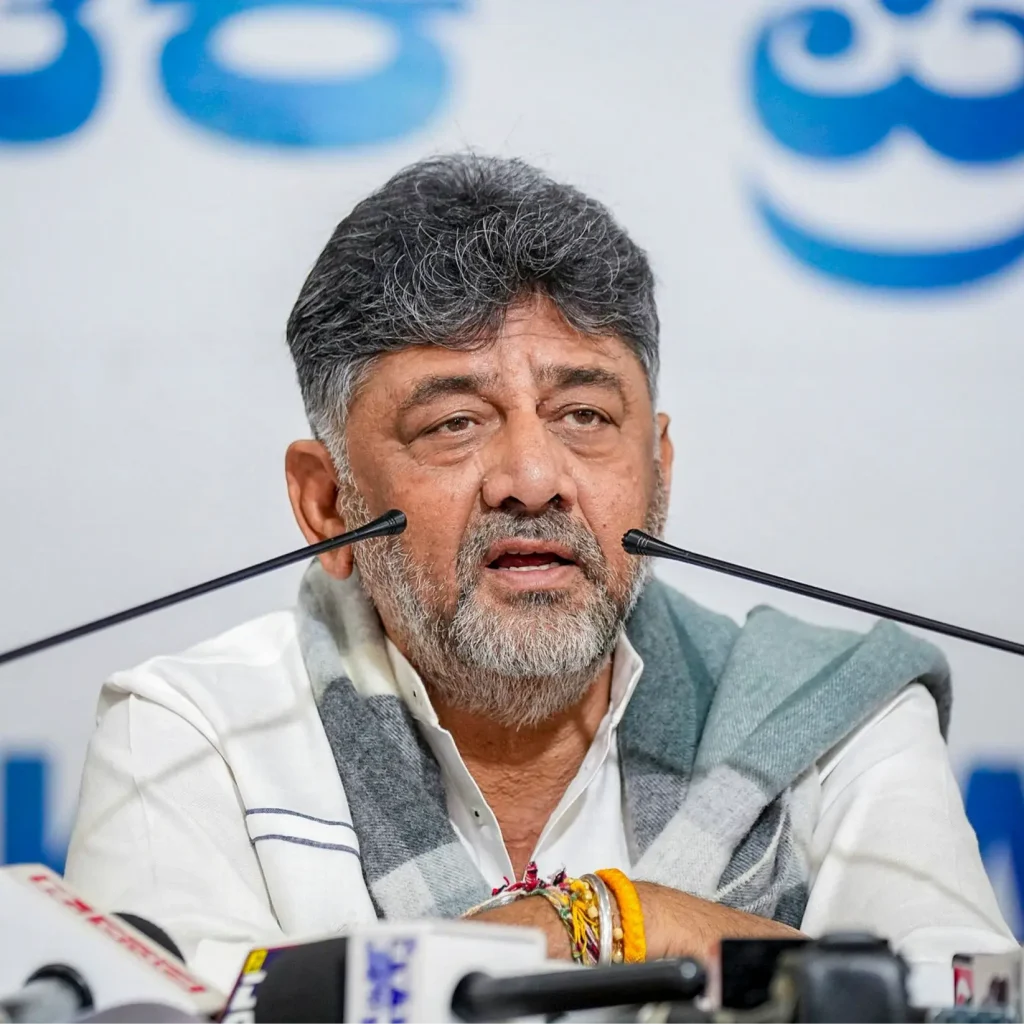
The proposed twin tunnel road project in Bengaluru is shaping up to be one of the first major political and administrative challenges for Karnataka Chief Minister-designate D K Shivakumar. The project has gained added attention following the emergence of the Adani Group as the lowest bidder, raising questions about how the Congress leadership will approach the proposal.
A Dream Infrastructure Project for Bengaluru
Shivakumar, who has long overseen Bengaluru’s development portfolio, has consistently championed the 17-kilometre tunnel road connecting Hebbal and Silk Board Junction as a critical solution to the city’s chronic traffic congestion.
According to him, widening existing roads is no longer a practical option in the rapidly growing metropolis. The tunnel road, estimated to cost ₹17,698 crore, is envisioned as a transformative infrastructure project that could significantly improve mobility across Bengaluru.
Adani Group Takes the Lead in Bidding Process
Adani Enterprises Limited has emerged as the lowest bidder for the public-private partnership (PPP) project and has already begun preliminary survey and soil-testing activities at the proposed site.
However, the bid is currently awaiting the first stage of government approval, which rests with Shivakumar and the state administration. Since the company’s proposal exceeds the government’s initial cost estimates, Cabinet approval will also be required before the project can move ahead.
Political Sensitivities Surround the Proposal
The project carries political significance because of Congress leader Rahul Gandhi’s longstanding criticism of industrialist Gautam Adani and the Adani Group.
Gandhi has repeatedly alleged that the conglomerate has benefited from its proximity to Prime Minister Narendra Modi. As a result, political observers are closely watching whether the Congress party’s national stance could influence Karnataka’s decision on the project.
Congress May Separate Politics from Business
Despite the political backdrop, some Congress leaders believe the party may adopt a pragmatic approach. They point to examples where Congress-ruled states have continued to engage with the Adani Group on infrastructure and investment projects while maintaining their political criticism of the company at the national level.
This approach could allow Karnataka to evaluate the project primarily on economic and infrastructure considerations rather than political optics.
Adani Expanding Presence in Opposition and Congress-Ruled States
The Adani Group has steadily expanded its investments across several states irrespective of political affiliations.
In Telangana, the conglomerate announced investments worth more than ₹12,400 crore during the World Economic Forum meeting in Davos in 2024, adding to its existing investments in the state.
The group has also committed investments of approximately ₹42,700 crore in Tamil Nadu. Meanwhile, the government in Kerala is working with the company to develop the strategically important Vizhinjam International Seaport into a major logistics and transshipment hub.
Concerns Over Cost and Public Utility
While Shivakumar remains a strong advocate of the tunnel road project, it has faced criticism from citizen groups and the opposition BJP, which have questioned both its cost and overall utility.
Reports have also highlighted concerns that the road could carry some of the highest toll charges in the country once operational.
Addressing concerns about the higher project quote, Shivakumar has maintained that the state’s financial contribution would be limited to 40 per cent of the government’s projected project cost, reducing the fiscal burden on the exchequer.
A Defining Decision Ahead
As Karnataka’s new leadership prepares to take charge, the Bengaluru tunnel road project is emerging as a defining early test for Shivakumar. The final decision will not only shape the city’s infrastructure future but could also reveal how the Congress balances political messaging with economic and development priorities.
