


Narendra Modi and Sheikh Mohamed bin Zayed Al Nahyan held high-level talks in Abu Dhabi, resulting in a series of agreements covering defence cooperation, strategic petroleum reserves, and liquefied petroleum gas (LPG) supplies.
During his brief stopover in the UAE before beginning a multi-country Europe tour, Modi reaffirmed India’s strong support for the Emirates amid rising tensions in West Asia. He stressed that the Strait of Hormuz must remain free, open, and secure, and described attacks on the UAE as unacceptable. Modi said India stands “shoulder to shoulder” with the UAE and supports efforts to restore peace and stability across the region.
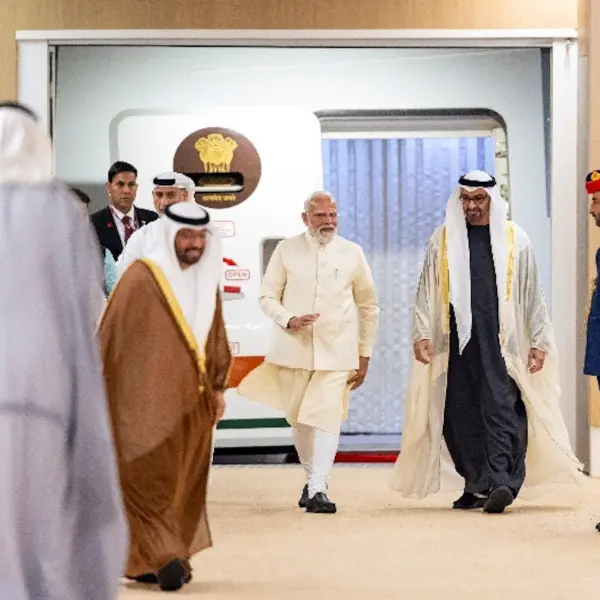
One of the key outcomes of the visit was the signing of a Framework for a Strategic Defence Partnership, aimed at deepening military and security ties between the two countries. Several energy-related agreements were also signed, including deals on strategic crude oil storage, LPG supplies, and the development of a ship repair cluster at Vadinar.
The visit also saw announcements of approximately $5 billion in investments in Indian infrastructure, RBL Bank, and Sammaan Capital.
Energy security was a central focus of the discussions. The UAE is India’s fourth-largest supplier of crude oil, accounting for about 11% of the country’s imports, and its largest source of LPG, meeting nearly 40% of India’s demand. Officials noted that the UAE has remained one of India’s most dependable energy partners despite ongoing geopolitical disruptions.
The two leaders also reviewed progress under the India-UAE Comprehensive Strategic Partnership. Modi praised Sheikh Mohamed’s leadership during a period of heightened regional uncertainty and thanked him for the support extended to the large Indian community living in the UAE.
The visit came against the backdrop of continuing conflict involving the Iran, Israel, and the United States, as well as concerns over shipping and energy flows through the Strait of Hormuz. In this context, India and the UAE signaled a stronger strategic and energy partnership aimed at enhancing regional stability and long-term energy security.
