
Close Menu
  • Home
  • Startups
  • Channeliam Fact Check
  • Middle East
    • Exploring UAE
    • Emerging saudi
  • Shepreneur
    • Top Women Startups
  • Remembering Ratan Tata
  • More
    • Jobs and Internships
    • Funding
    • Entrepreneur
    • Technology
      • Auto
      • Gadgets
    • Updates
    • MSME
    • Movies
    • Travel
    • Events
    • Featured
    • Editor’s Pick
    • Discover and Recover
CHANGE LANGUAGE
What's Hot

Why Rail Corridors Are the Future of Intercity Travel

5 February 2026

Nvidia to Invest Billions in OpenAI

4 February 2026

Germany Gains from India EU Trade Deal

4 February 2026
Facebook X (Twitter) Instagram
  • About Us
  • I am Startup Studio
  • I am an Entrepreneur
  • She Power
  • I AM NOW AI
YouTube Facebook Instagram LinkedIn X (Twitter)
Channeliam / Channel I'M EnglishChanneliam / Channel I'M English
  • Home
  • Startups
  • Channeliam Fact Check
  • Middle East
    • Exploring UAE
    • Emerging saudi
  • Shepreneur
    • Top Women Startups
  • Remembering Ratan Tata
  • More
    • Jobs and Internships
    • Funding
    • Entrepreneur
    • Technology
      • Auto
      • Gadgets
    • Updates
    • MSME
    • Movies
    • Travel
    • Events
    • Featured
    • Editor’s Pick
    • Discover and Recover
Change Language
Channeliam / Channel I'M EnglishChanneliam / Channel I'M English
Change Language
Home » Why Rail Corridors Are the Future of Intercity Travel
News Update

Why Rail Corridors Are the Future of Intercity Travel

India’s upcoming high-speed rail corridors are designed to boost connectivity, transform intercity travel, cut journey times, and make travel between major cities faster, smoother, and more efficient while supporting economic growth and sustainable transport.
News DeskBy News Desk5 February 2026No Comments2 Mins Read
Facebook Twitter Pinterest LinkedIn Email Telegram WhatsApp
Share
Facebook Twitter LinkedIn Pinterest Email Telegram WhatsApp

In the Union Budget 2026–27, Finance and Corporate Affairs Minister Nirmala Sitharaman announced an ambitious expansion of India’s rail network: seven new high-speed rail corridors spanning nearly 4,000 km, backed by an estimated investment of Rs 16 lakh crore.
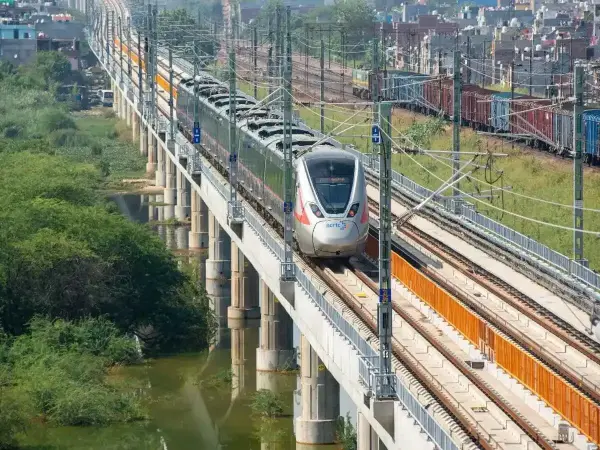
union budget 2026 high speed rail corridors india

The proposed corridors will link Mumbai–Pune, Pune–Hyderabad, Hyderabad–Bengaluru, Hyderabad–Chennai, Chennai–Bengaluru, Delhi–Varanasi, and Varanasi–Siliguri, dramatically reshaping intercity travel.

If implemented as planned, routes like Chennai to Bengaluru—currently a journey of over six hours—could be shortened to just 90 minutes to two hours.

This leap hinges on the concept of railway corridors. So what does that actually mean?

A rail corridor is best understood as a fast lane built exclusively for trains. It is a dedicated stretch of land designed for uninterrupted movement, complete with tracks, signalling systems, stations, and supporting infrastructure, all optimised for efficiency.

Unlike conventional railway lines that pass through towns, crossings, and multiple stopovers, rail corridors prioritise speed and capacity. They operate on exclusive tracks, use advanced signalling, eliminate level crossings, and minimise disruptions, allowing trains to run faster and on tighter schedules.

India already uses this model through its Dedicated Freight Corridors, such as the Eastern and Western DFCs, which handle heavy cargo and free up existing tracks for passenger services.

Passenger-focused corridors, especially between major cities and industrial regions, help fuel economic growth, reduce logistics costs, and take pressure off congested roads. Globally, high-capacity rail networks in Europe and China show how corridors form the backbone of modern transport systems.

High-speed rail corridors take this idea even further.

Designed for speeds of 250 to 350 kmph, these corridors rely on purpose-built infrastructure: precision-laid tracks, aerodynamic trains, gentle curves, tunnels, viaducts, and advanced safety systems with automated controls. This is not about upgrading old lines but creating an entirely new ecosystem for rail travel.

The aim is simple: turn long, exhausting journeys into quick, comfortable trips, making business travel, leisure breaks, and even intercity commuting far more practical.

Japan set the benchmark with the Shinkansen in 1964, followed by France’s TGV and China’s expansive high-speed network. India’s upcoming corridors will draw on domestic manufacturing and technology, offering a cleaner alternative to air and road travel with significantly lower emissions.

While challenges such as land acquisition and high upfront costs remain, the long-term gains are substantial. Faster connectivity, job creation, tourism growth, urban development along routes, and reduced carbon emissions all factor into the payoff.

banner bullet train India plan Chennai Bengaluru bullet train dedicated rail corridor India Delhi Varanasi rail corridor green transport rail high-speed rail India Indian Railways modernization Mumbai Pune high-speed rail new rail corridors India rail infrastructure investment India railway corridor meaning Union Budget 2026 rail projects
Share. Facebook Twitter Pinterest LinkedIn Email Telegram WhatsApp
News Desk
  • Website

Related Posts

Nvidia to Invest Billions in OpenAI

4 February 2026

Germany Gains from India EU Trade Deal

4 February 2026

Tata Chemicals Plans Major Expansion

4 February 2026

WhatsApp Faces Privacy Questions

4 February 2026
Add A Comment
Leave A Reply Cancel Reply

Careers
Recent Posts
  • Why Rail Corridors Are the Future of Intercity Travel
  • Nvidia to Invest Billions in OpenAI
  • Germany Gains from India EU Trade Deal
  • Tata Chemicals Plans Major Expansion
  • WhatsApp Faces Privacy Questions
Editors Picks

Why Rail Corridors Are the Future of Intercity Travel

5 February 2026

Nvidia to Invest Billions in OpenAI

4 February 2026

Germany Gains from India EU Trade Deal

4 February 2026

Tata Chemicals Plans Major Expansion

4 February 2026
About Us
About Us

The first exclusive digital video media platform for startups and future business leaders, Channel I’M, the brainchild of Mrs. Nisha Krishan, unveils the first glimpse of how Indian startups think/create/market futuristic products and services.

Subscribe to Updates

Get the latest creative news about entrepreneurs, startups, and businesses.

Updates
  • Why Rail Corridors Are the Future of Intercity Travel
  • Nvidia to Invest Billions in OpenAI
  • Germany Gains from India EU Trade Deal
  • Tata Chemicals Plans Major Expansion
  • WhatsApp Faces Privacy Questions
YouTube Facebook X (Twitter) Instagram Pinterest LinkedIn RSS
  • Home
  • About Us
  • Promotions
  • Careers
  • Contact Us
© 2026 Likes and Shares Pvt Ltd. Powered By arbaneo

Type above and press Enter to search. Press Esc to cancel.

Change Language
Malayalam
Hindi
Tamil
Change Language
Malayalam
Hindi
Tamil