


A broader energy crunch linked to disruptions from the Iran conflict has led to long queues for cooking gas cylinders across parts of India. While supply pressures and panic buying have affected access to liquefied petroleum gas (LPG), some rural households are turning to alternative fuels.
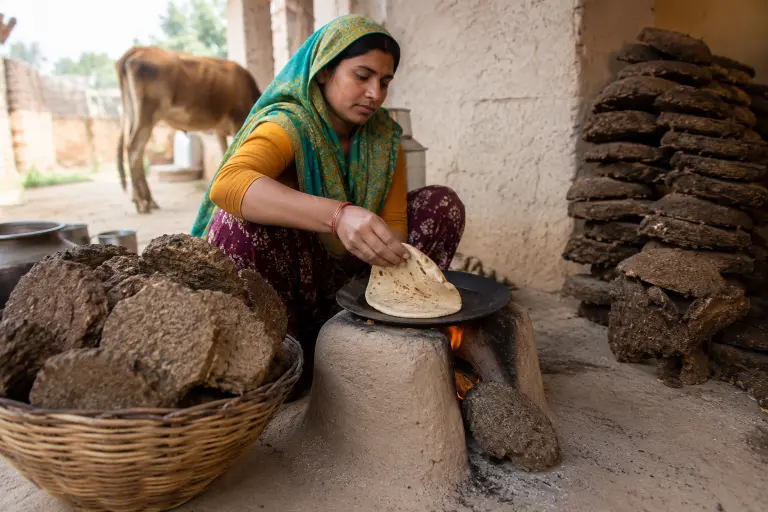
In Uttar Pradesh’s Nekpur village, about 90 kilometres from New Delhi, 25-year-old Gauri Devi relies on biogas generated from cow dung to cook daily meals. Using a simple household setup, she feeds dung mixed with water into an underground digester that produces methane for cooking.
“It cooks everything,” she said, adding that even when pressure drops, the system resumes working after a short pause. She mainly depends on LPG only during emergencies or large gatherings.
India consumes over 30 million tonnes of LPG annually and imports more than half of its requirement. Although the government maintains there is no formal shortage, distribution delays and hoarding have led to visible shortages in several areas.
Biogas as a rural energy solution
Biogas systems, promoted in India since the 1980s, convert farm waste into methane for cooking and produce nutrient-rich slurry used as fertiliser. More than five million such units have been subsidised nationwide.
For farmers like Pramod Singh, who installed a larger unit in 2025, the system processes dung from cattle and provides both fuel and agricultural benefits. He described the leftover slurry as highly valuable for soil fertility, especially as global fertiliser supply chains face disruptions.
Local farmer leader Pritam Singh called the slurry “black gold,” noting that its value sometimes exceeds the fuel output itself.
Government push and climate goals
With over 45% of India’s population dependent on agriculture and a large cattle population, biogas has gained policy attention. India aims to reach carbon neutrality by 2070 and has set targets to increase biogas blending in domestic and transport fuel systems from 1% to 5% by 2028.
The government is also supporting both large industrial biogas plants and small rural units, which cost around ₹25,000–₹30,000 and are often subsidised.
Adoption challenges remain
Despite growing interest, experts say biogas still plays a limited role in household energy use. LPG remains more convenient due to established supply chains and ease of use.
According to the Indian Biogas Association, systems require proper installation and maintenance, and often work best when managed through community or cooperative models rather than individual households.
Cost and lack of space also remain barriers. Many rural labourers, already dependent on daily wage work, say they cannot afford or accommodate such systems.
In nearby Madalpur village, residents continue to queue for LPG cylinders despite the heat and long waits, reflecting ongoing dependence on conventional fuel sources even as alternatives gain attention.
