


India’s growing defence export ambitions in the Indo-Pacific have placed the BrahMos supersonic cruise missile at the centre of regional security discussions. After securing export agreements with countries such as the Philippines and exploring opportunities with Vietnam and Indonesia, questions have emerged over whether Taiwan could become a future customer.
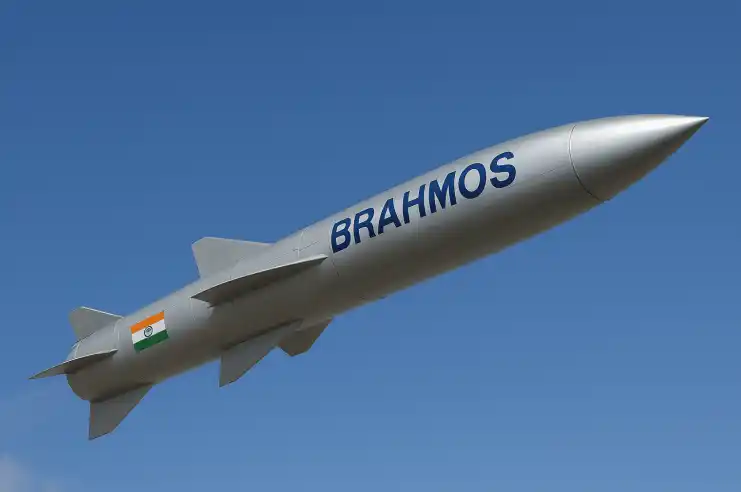
While BrahMos would significantly enhance Taiwan’s ability to counter a potential military threat from China, a transfer of the missile system to Taipei remains highly unlikely due to diplomatic, strategic and technical challenges.
Russia’s Role Remains a Major Factor
The biggest hurdle is the structure of the BrahMos programme itself. The missile is jointly developed by India’s Defence Research and Development Organisation (DRDO) and Russia’s NPO Mashinostroyeniya.
Although India has increased the indigenous content in newer variants, BrahMos remains a joint venture requiring approval from both partners for exports to third countries.
Given Russia’s increasingly close strategic relationship with China, Moscow would be unlikely to approve a sale of the missile system to Taiwan, which Beijing considers part of its territory.
India’s Diplomatic Balancing Act
India has expanded economic, technological and educational engagement with Taiwan over the years. However, New Delhi does not maintain formal diplomatic relations with Taipei and continues to follow a cautious policy regarding Taiwan’s political status.
Supplying one of India’s most advanced strategic weapons to Taiwan would represent a major shift in this approach and could trigger a strong reaction from China.
The move could also complicate India’s own security environment, especially amid continuing tensions with Beijing along the Line of Actual Control (LAC).
BrahMos Capability Could Boost Taiwan’s Defence
Despite the low possibility of a BrahMos export to Taiwan, defence analysts note that such a weapon would significantly strengthen the island’s maritime defence capabilities.
The BrahMos can travel at nearly Mach 3 speeds and follows low-altitude flight paths, making interception extremely difficult for naval forces. In a potential conflict scenario involving an amphibious operation across the Taiwan Strait, such missiles could create serious challenges for attacking fleets.
Mobile land-based BrahMos systems would also provide survivability advantages. Transporter-erector-launchers can be relocated quickly, allowing missile units to operate from concealed positions and continue launching strikes even after an initial attack.
Taiwan Has Built Its Own Missile Capability
Taiwan, however, is not entirely dependent on foreign missile systems for coastal defence. The island has developed the Hsiung Feng III (HF-3), an indigenous supersonic anti-ship cruise missile designed to target hostile naval forces.
Combined with other systems, including US-made Harpoon missiles, Taiwan is building a layered maritime defence network aimed at deterring potential aggression.
India’s Indo-Pacific Defence Strategy
Instead of supplying weapons directly to Taiwan, India has focused on strengthening defence partnerships with other Indo-Pacific nations.
The export of BrahMos missile systems to the Philippines and potential future deals with Vietnam and Indonesia reflect India’s broader strategy of expanding defence cooperation while avoiding direct confrontation with China.
Through these partnerships, India is helping build stronger maritime security capabilities in the region while balancing its own diplomatic and strategic interests.
The BrahMos programme has become a symbol of India’s growing role as a defence exporter. However, a BrahMos deal with Taiwan would cross significant geopolitical boundaries that New Delhi is currently unlikely to challenge.
