


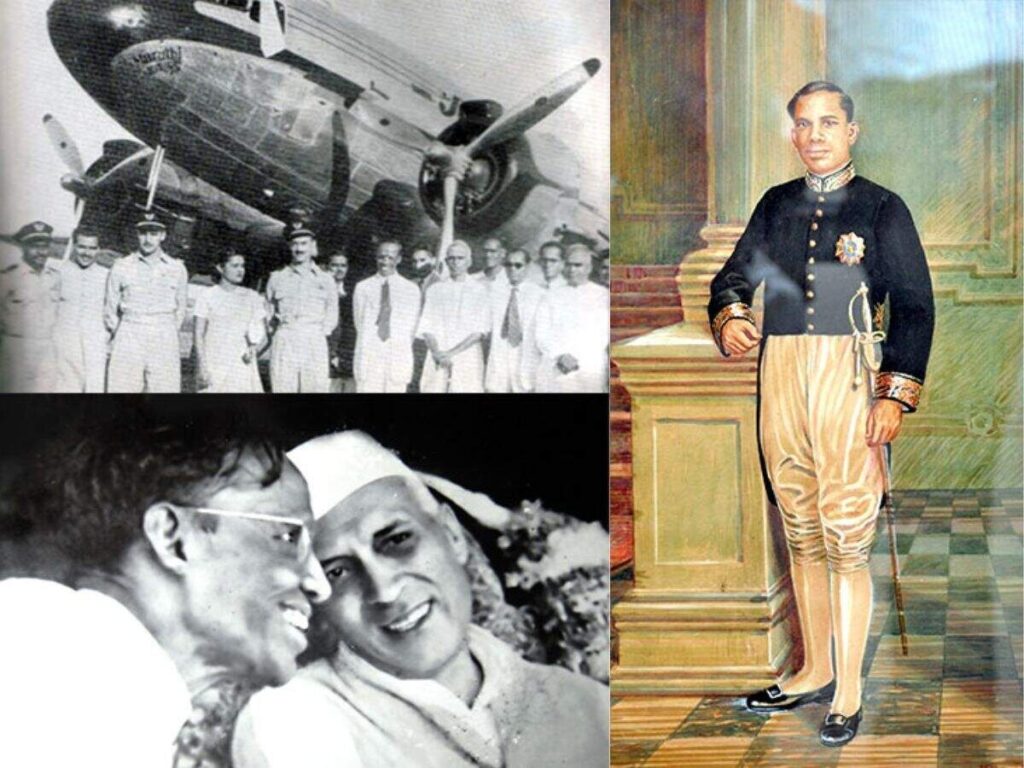
Dr R M Alagappa Chettiar from Tamil Nadu was not just an industrialist but a rare figure who blended business success with public service, education, and nation building. At a time when India was going through the turmoil of Partition, he used his private airline not for commercial gain but to support humanitarian rescue efforts, helping transport refugees and assist the Indian Army during one of the country’s most difficult phases.
Born in 1909 in Kottaiyur in the Chettinad region, he rose from a small-town background to build a diversified business empire spanning textiles, plantations, mining, insurance, hospitality and aviation. Despite his global business reach, he remained deeply connected to Karaikudi and focused heavily on social development.
Businessman who chose a different path
After completing his education in literature at Presidency College and qualifying as a barrister in England, Alagappa Chettiar chose entrepreneurship over law practice. He founded Cochin Textiles in 1937 and gradually expanded into multiple sectors including rubber plantations in Malaya, tin mines in Burma, cinema, hotels and aviation.
He was also among the early Indian industrialists to take interest in aviation and earned a pilot’s licence in London, reflecting his forward-looking approach.
Role in Partition relief operations
During the Partition in 1947, his airline Jupiter Airways played a humanitarian role by supporting relief operations. His aircraft were used to transport refugees and assist in moving essential supplies and military personnel during a time of national crisis. This reflected his belief that business assets should serve the country in moments of need.
Builder of institutions and education ecosystem
Beyond industry, his most lasting contribution came through education. He believed real progress comes from institutions, not individual wealth. His support helped establish and strengthen several educational institutions including engineering colleges, schools, nursing colleges, and notably Alagappa University in Karaikudi.
One of his most impactful contributions was donating 300 acres of land along with financial support to the Government of India, which helped establish the Central Electrochemical Research Institute (CECRI) in Karaikudi. This transformed the region into a scientific research hub and earned praise from national leaders.
Influence on social welfare models
Alagappa Chettiar also supported community welfare initiatives such as providing free meals to students and the needy in Karaikudi. This simple idea later inspired Tamil Nadu leader K Kamaraj, contributing to the development of the state’s midday meal programme, which became a landmark welfare initiative for schoolchildren.
Recognition and legacy
His contributions earned him several honours including honorary doctorates and a knighthood in 1946, which he later relinquished after Independence. He was also awarded the Padma Bhushan in 1957.
He passed away the same year at the age of 48, but his legacy continues through institutions he created and supported. His life stands as an example of an industrialist who defined success not just through business growth, but through lasting contributions to education, science, and public welfare.
