


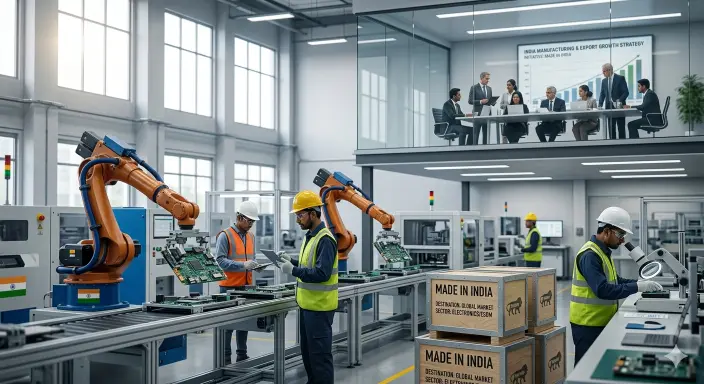
The Central government is preparing to roll out a ‘Made in India’ branding scheme aimed at strengthening the global identity of Indian products, following a successful pilot project in the steel sector, according to Amardeep Singh Bhatia, Secretary at the Department for Promotion of Industry and Internal Trade (DPIIT).
Speaking at a Confederation of Indian Industry (CII) summit, Bhatia said the scheme has been under discussion for a long time and is now ready for launch. The pilot in the steel industry has shown encouraging results, and the government will now engage with industry stakeholders to decide which sectors to include.
The initiative will provide a unified brand identity, including a logo, that Indian companies can use to highlight value addition and assure product quality in global markets.
Bhatia also said the government is working to identify around 100 products that are either not manufactured in India or are under-produced. This includes items from sectors such as automobiles and motorcycles, where gaps in technology can be addressed. The broader goal is to strengthen domestic manufacturing while reducing import dependence.
The focus, he added, is also on developing the “missing middle” in manufacturing by boosting intermediate goods production and helping micro, small, and medium enterprises scale up.
At a separate session, Commerce Secretary Rajesh Agrawal said India’s industrial policy must work in alignment with its trade policy. He stressed that both should support each other to strengthen domestic industries, reduce imports, and integrate India more deeply into global value chains.
The announcements come shortly after Prime Minister Narendra Modi urged citizens to reduce reliance on imported goods amid global disruptions, including tensions in West Asia.
Bhatia also highlighted that India is preparing for rapid technological shifts, particularly in artificial intelligence, which is expected to enhance productivity and innovation in manufacturing. He noted that geopolitical uncertainty continues to impact global supply chains, making domestic resilience even more important.
He encouraged companies to invest in India for the long term and said recent free trade agreements will create new opportunities for Indian businesses in global markets.
