


India is close to finalising a major defence agreement worth around $8 billion with Germany, in what is expected to become the country’s largest-ever defence procurement deal. The agreement is likely to be completed within the next 90 days, according to German Defence Minister Boris Pistorius.
The deal involves a partnership between Germany’s Thyssenkrupp Marine Systems and India’s Mazagon Dock Shipbuilders Limited to jointly build six advanced submarines in India. The project will follow a technology-transfer model, with significant production knowledge expected to be shared with Indian partners.
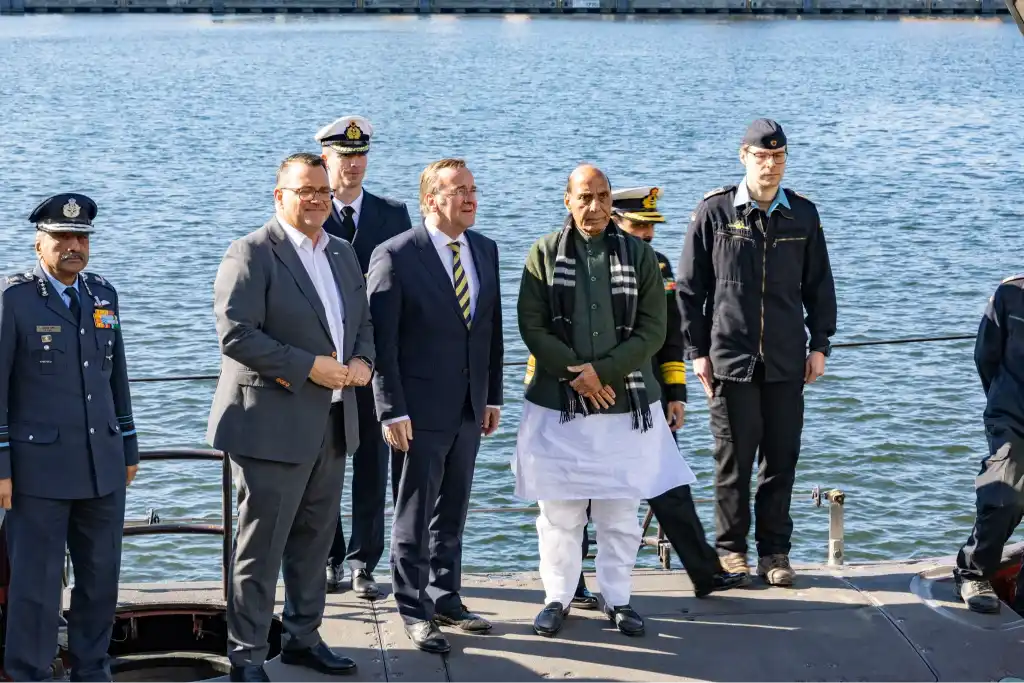
Focus on Domestic Manufacturing
The agreement aligns with India’s broader “Make in India” push in the defence sector, aiming to reduce dependence on imports and strengthen local manufacturing capacity. All six submarines are expected to be built in India, marking a major step in domestic naval production capability.
Officials from both sides have indicated that discussions are in an advanced stage, with formal signing expected after final approvals.
Technology Transfer at the Core
A key element of the deal is the transfer of submarine-building technology from Germany to India. This is seen as a strategic shift from India’s earlier reliance on fully imported platforms from countries such as Russia and France.
While detailed specifications of the technology package have not been disclosed, the collaboration is being described as one of the most significant defence-industrial partnerships between India and Germany to date.
Strengthening Naval Capability
The agreement comes as India continues to modernise its underwater fleet amid growing maritime security challenges in the Indo-Pacific region. Strengthening submarine capability is considered critical for maintaining long-term naval balance and operational readiness.
The deal also builds on recent defence cooperation initiatives between India and Germany, including a joint roadmap for industrial collaboration and defence manufacturing.
Industrial and Economic Impact
Beyond defence strategy, the project is expected to have a major industrial impact. At $8 billion, it represents one of India’s largest defence manufacturing programmes, with potential benefits for shipbuilding ecosystems, engineering jobs, and local supply chains.
However, experts note that the success of the project will depend on execution quality, cost control, and the effectiveness of technology transfer over time.
Broader Strategic Direction
The submarine deal reflects India’s broader shift toward defence self-reliance and diversified partnerships. Instead of depending on a single supplier country, India is increasingly working with multiple global defence players to build domestic capability.
