


The Tamil Nadu Urban Infrastructure Financial Services Limited (TNUIFSL) has floated tenders to appoint consultancy firms for preparing Detailed Feasibility Reports (DFRs) and providing transaction advisory services for municipal solid waste collection and transportation under the Public-Private Partnership (PPP) model across 12 municipal corporations in Tamil Nadu.
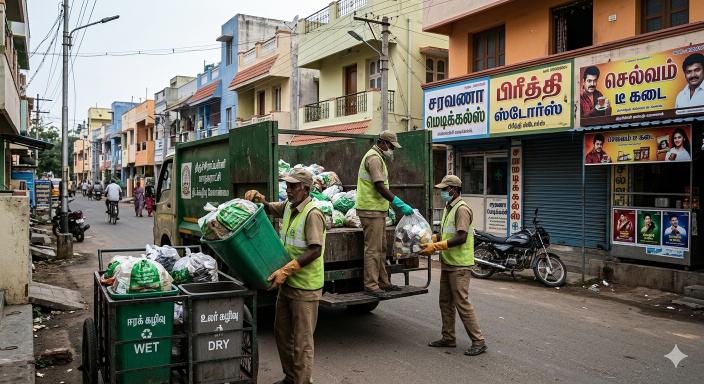
The corporations included in the plan are Avadi, Hosur, Tambaram, Vellore, Coimbatore, Erode, Salem, Tiruppur, Madurai, Thoothukudi, Tiruchirappalli, and Tirunelveli. The consultancy assignment has been divided into three packages, with an estimated total cost of Rs 4.05 crore.
According to G.O. 116 issued on August 24, 2022 by the Municipal Administration and Water Supply Department, all corporations and municipalities in the state were permitted to carry out solid waste management through private agencies on a contractual basis for three years.
Officials said the current contracts are nearing completion, making it necessary to float fresh tenders. However, they also pointed out shortcomings in existing arrangements, especially in maintaining cleanliness standards, improving monitoring systems, and ensuring better service delivery. A review of contract conditions is being planned before new tenders are issued.
The proposed consultancy will focus on developing frameworks to help the 12 corporations move towards garbage-free status, ensure effective implementation of Solid Waste Management Rules 2026, and prepare detailed feasibility reports for future operations.
At the same time, conservancy workers have raised concerns over continued outsourcing, saying it has led to job insecurity, poor working conditions, and weak welfare support. Labour representatives, including R Balasubramanian of CITU, said privatisation has reduced opportunities for permanent employment and weakened workers’ rights.
K Bharathi, president of Uzhaippor Urimai Iyakkam, which led a prolonged protest against privatisation in Chennai, said the government should prioritise workers’ welfare and avoid outsourcing, arguing that it mainly benefits private corporates.
