


The UDF government has unveiled an ambitious reform agenda aimed at addressing Kerala’s mounting financial challenges, as outlined in a white paper tabled in the Assembly. According to the document, Kerala’s total liabilities have reached ₹5.07 lakh crore, placing significant strain on the state’s fiscal structure.
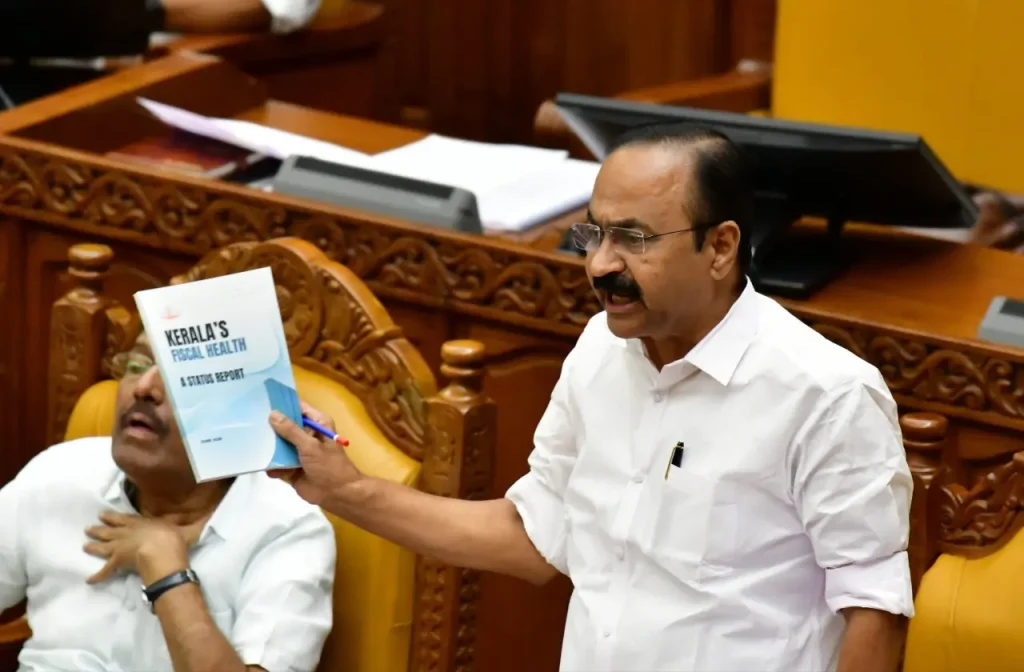
The white paper notes that nearly 80% of the state’s revenue is currently spent on salaries, pensions, and interest payments, leaving limited resources for development and infrastructure projects.
Among its key recommendations is raising the retirement age of state government employees to 60 years, in line with the Central government. The paper estimates that even a one-year increase in retirement age could save the state around ₹6,000 crore in pension-related expenditure.
The report also proposes major reforms in the public sector. Loss-making state-owned enterprises could be restructured, privatized, or shut down, while private and central public sector investments may be encouraged in the power sector to boost electricity generation capacity.
To improve operational efficiency, the white paper calls for a comprehensive digital transformation of government services, moving beyond simply shifting paper-based processes online and instead redesigning procedures to be more citizen-friendly.
A notable proposal is the merger of Supplyco with the profitable Kerala State Beverages Corporation (Bevco). The move is intended to offset Supplyco’s losses through Bevco’s earnings and create a more financially sustainable model.
The white paper also recommends bringing KIIFB under tighter government control through amendments to the existing legislation. It argues that direct government borrowing could be more cost-effective than the current financing structure, particularly since KIIFB’s liabilities are now counted within the state’s overall debt ceiling.
The proposals signal a potentially significant shift in Kerala’s economic management strategy, with the government indicating its willingness to pursue difficult structural reforms to restore fiscal stability and support long-term growth.
