


Bangladesh Prime Minister Tarique Rahman is preparing for his first official overseas trip since taking office in February, and the possible destinations have already triggered strategic interest in both New Delhi and Beijing. According to sources cited by NDTV, the visit is expected to be to an Asian country, with India and China emerging as the leading contenders.
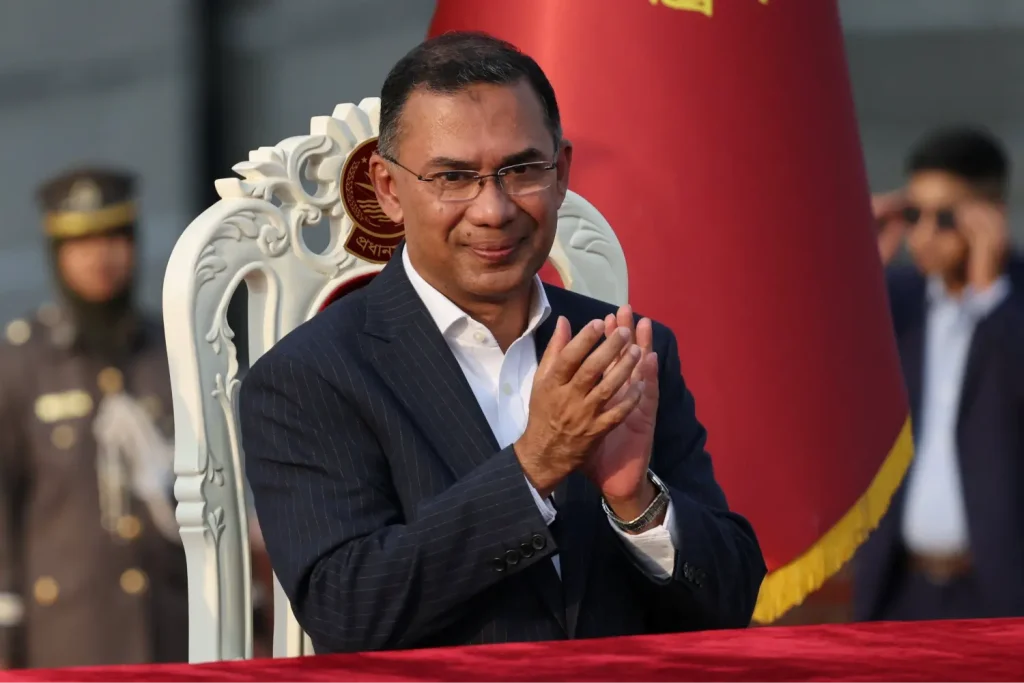
Beijing is reportedly preparing to host Rahman in late June, while no official India visit has been confirmed yet. Both countries had extended invitations soon after he assumed office, making the first trip politically significant for signalling Bangladesh’s early diplomatic direction.
Symbolism Behind the First Visit Choice
The first foreign visit of any new head of government is often seen as a signal of strategic alignment and foreign policy priorities. Rahman’s decision is being closely compared with the previous interim leadership under Muhammad Yunus, who travelled extensively across 13 countries between 2024 and 2026, with China as his first major Asian destination.
Unlike that period, Bangladesh’s current political situation presents a different context, especially given efforts to stabilise relations with India after years of strain.
India and China Compete for Diplomatic Engagement
India moved quickly after the election outcome, with Prime Minister Narendra Modi among the first global leaders to invite Rahman and congratulate him. Recent exchanges, including visits by Bangladesh Foreign Minister Khalilur Rahman to India, have indicated gradual normalisation in ties, with both sides describing talks as constructive and forward-looking.
At the same time, China has intensified engagement with Dhaka’s new leadership. Senior political figures from Bangladesh, including BNP Secretary-General Mirza Fakhrul Islam Alamgir, have already visited Beijing, followed by further diplomatic outreach. China remains a key development partner for Bangladesh, particularly in infrastructure and regional connectivity projects.
Teesta Project Adds Strategic Complexity
A major point of attention is the Teesta River Comprehensive Management and Restoration Project. During recent discussions with China, Bangladesh reportedly expressed interest in Beijing’s involvement in the initiative, even though India had previously explored cooperation on the same project.
Progress on the agreement has historically been stalled due to political opposition in West Bengal, though the situation has evolved politically in recent years. Experts note that any formal move involving China on the Teesta project would be closely watched in India due to its strategic sensitivity near the Siliguri Corridor.
Balancing Diplomacy Without Sides
Despite growing engagement with both neighbours, Bangladesh has signalled that it does not intend to align its foreign policy in a binary manner. Officials have emphasised that relationships with different countries are guided by national interest and economic priorities rather than geopolitical competition.
As Rahman’s first foreign visit approaches, it is being seen as an early indicator of how Bangladesh plans to balance its ties with India and China in a shifting regional landscape.
