


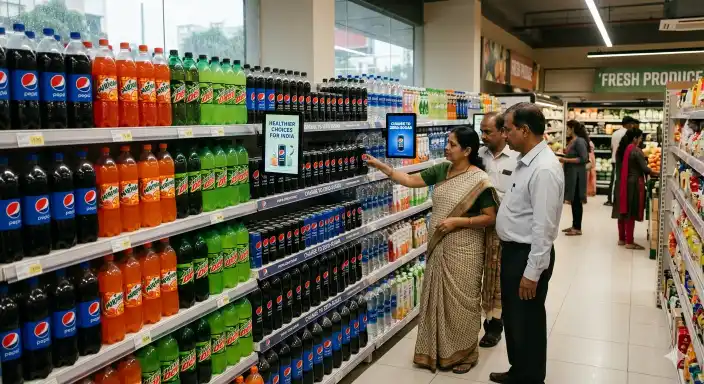
PepsiCo India head Jagrut Kotecha has outlined a major change in the company’s beverage strategy, aiming to move its product mix from 55–60% zero-sugar and mid-calorie drinks to nearly 100% by 2030. The goal is to align with growing demand for healthier beverage choices.
Focus on consumer awareness and adoption
The transition will require strong marketing and consumer education to shift long-standing taste preferences. PepsiCo will need to encourage adoption of healthier options, some of which may be priced higher than traditional drinks.
Digital tools and distribution expansion
The company is using digital platforms like WhatsApp-based consumer engagement, social listening, and e-commerce insights to track demand. A ₹5,700 crore investment between 2025 and 2030 will support capacity expansion, but scaling distribution across India remains a key challenge.
Competitive and fast-changing beverage market
India’s $39.3 billion beverage market is highly competitive. Coca-Cola is also expanding into health-focused and fortified drinks, while new entrants like Reliance’s Campa Cola are increasing pressure. Health-oriented categories are growing faster than traditional sodas.
India as a key growth market for PepsiCo
India is one of PepsiCo’s 13 priority global markets and is expected to contribute over 85% of future growth. Beverage consumption is projected to nearly double by 2035, driven by premiumisation, digitalisation, and sustainability trends. The company has already invested over $1 billion in the country.
Risks and market challenges
Analysts caution that the rapid shift toward healthier drinks may face resistance due to taste preferences and price sensitivity. Competition is intense, and maintaining both market share and profitability could be difficult amid slowing earnings and aggressive rivals.
Outlook on India strategy
PepsiCo aims to significantly grow revenue in India over the next five years, with strong expectations from its investment plan. However, success will depend on how effectively it balances affordability, availability, and changing consumer preferences in a highly competitive market.
