


FMCG company BL Agro Group plans to invest ₹1,500 crore in its biotechnology arm Leads Genetics to build an integrated cattle genetics and reproductive technology ecosystem in India.
The initiative aims to improve cattle breeds, increase milk productivity and expand the use of advanced reproductive technologies in the dairy sector.
New Genetics and Reproductive Facilities
The planned investment will include an integrated Breed Improvement Farm, an IVF-ET laboratory, a Multiple Ovulation Embryo Transfer (MOET) facility, a pathology laboratory and a genomics laboratory.
Together, these facilities will cover the main stages of breed improvement, from genetic testing and selection to the multiplication and distribution of superior cattle genetics.
Talks With Four State Governments
BL Agro said it is in discussions with the governments of Uttar Pradesh, Maharashtra, Bihar and Madhya Pradesh to expand the model to other states.
The company plans to bring cattle breeding, genomics and reproductive technologies under a single system as part of its wider dairy-sector plans.
The initiative is part of BL Agro’s 360-degree milk value chain, which covers genetics, breeding, animal health, nutrition, milk production, processing and market linkages. Farmer training and extension programmes will also support the initiative.
Focus on Indigenous Cattle
Uttar Pradesh Animal Husbandry Minister Dharampal Singh said India is the world’s largest milk producer but still faces low milk productivity per animal and depends on imported genetic material for advanced cattle breeding.
He said producing elite bulls, embryos and sexed semen domestically could help India reduce its dependence on imported germplasm.
BL Agro has also introduced its first Zebu-optimised bovine SNP chip and demonstrated next-generation sequencing using an Illumina NovaSeq X platform.
The company said the developments are linked to the India-Brazil partnership on cattle genetics.
Genomics to Improve Breed Selection
The genomic chip can examine thousands of genetic markers in cattle. According to BL Agro, this can help identify animals with desirable traits such as higher milk production, fertility, growth, health, heat tolerance and resistance to ticks and parasites.
Combining genomic selection with IVF, embryo transfer and sex-sorted semen could help multiply superior cattle genetics faster than conventional breeding methods.
Embryo Production to Rise
BL Agro Chairman Ghanshyam Khandelwal said the investment will focus on improving milk production, reproductive performance and the economic value of cattle while creating employment opportunities for rural youth.
Leads Genetics plans to increase embryo production to 15,000 embryos a month by the end of 2027, according to Sarvannan Durairaj, Head of IVF-MOET at Leads Genetics.
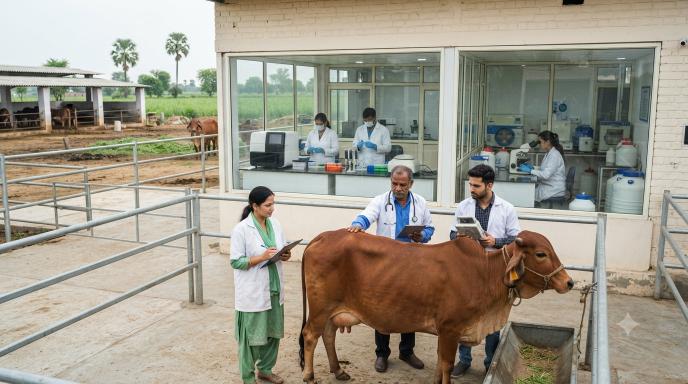
The company is also developing a Centre of Excellence to expand advanced embryo-production technologies and make improved genetics available on a larger scale.
The programme will focus particularly on indigenous breeds and climate-resilient cattle.
S.K. Aggarwal, Vice-President of Operations, said the company aims to combine advanced genetics with scientific farm management to improve the productivity, reproductive performance and resilience of Indian cattle.
