


For more than six decades, India’s nuclear power sector remained under exclusive government control. This changed with the introduction of the SHANTI Act, 2025, which opened the possibility for private companies to participate in nuclear energy development.
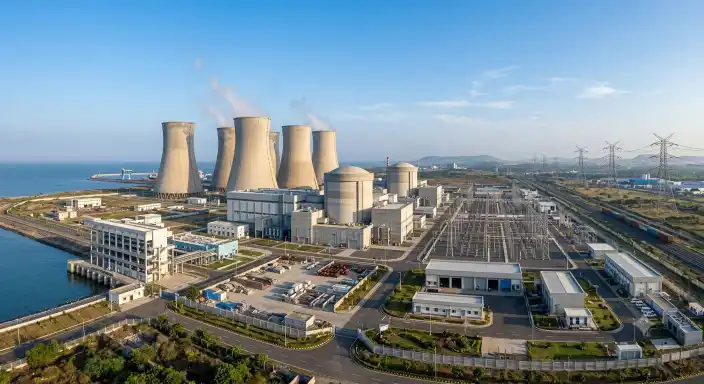
Following the policy shift, major power companies including NTPC, Adani and Tata are moving ahead with plans to secure land and identify potential sites for future nuclear power projects, even before the detailed regulatory framework is finalised.
What Is The SHANTI Act And Why Is It Important?
The Sustainable Harnessing and Advancement of Nuclear Energy for Transforming India (SHANTI) Act, 2025 replaced the earlier Atomic Energy Act, 1962 and the Civil Liability for Nuclear Damage Act, 2010.
The new legislation allows private companies to develop and operate nuclear power projects for the first time, while keeping strategic and sensitive nuclear activities under government oversight.
The Act aims to help India expand its nuclear power capacity from the current 8.78 GW to 100 GW by 2047 as part of the country’s long-term clean energy goals.
However, the government is yet to announce detailed rules covering key areas such as fuel supply, safety standards, maintenance responsibilities and operational procedures. Until these regulations are finalised, private sector plans remain at the initial stage.
NTPC Plans Major Nuclear Expansion
NTPC, India’s largest power generation company, is among the first companies preparing for large-scale nuclear expansion.
The company has identified more than 30 possible locations and is conducting preliminary studies at around 10 sites. Its key project is the 2.8 GW Mahi Banswara nuclear power plant in Rajasthan, being developed through Anushakti Vidhyut Nigam, a joint venture with Nuclear Power Corporation of India Limited (NPCIL).
Apart from the joint venture project, NTPC has set a target of developing 30 GW of nuclear capacity by 2047. The company plans significant investment towards this goal, with nearly ₹1.28 lakh crore expected to be allocated through FY37.
Adani Enters Nuclear Energy Sector
Adani Power is also preparing to enter the nuclear energy space with ambitious expansion plans.
The company acquired the Bina and Nigrie sites in Madhya Pradesh as part of its acquisition of Jaiprakash Associates’ thermal power assets under a broader debt resolution plan.
Adani is also planning major nuclear projects in Odisha, including two proposed 2,800 MW nuclear plants with a combined investment estimated at around ₹1.5 lakh crore.
To support its nuclear ambitions, Adani has established a dedicated subsidiary, Adani Atomic Energy, along with separate entities focused on power generation, transmission and distribution.
Tata Power Identifies Future Nuclear Sites
Tata Power has reportedly identified potential nuclear project locations in Madhya Pradesh, Odisha and Gujarat.
The company is currently conducting soil testing and geotechnical studies at these sites. Reports suggest Tata Power expects more clarity on its plans within the next six to eight months, with construction potentially beginning in early 2028 and the first reactor becoming operational by 2032-33.
However, these plans depend on the finalisation of government rules and approvals.
Can India Achieve 100 GW Nuclear Capacity By 2047?
India’s ambitious nuclear expansion target faces several challenges, including land acquisition, public acceptance, safety concerns and regulatory approvals.
Experts believe emerging technologies such as small modular reactors (SMRs) could help address some of these challenges by requiring less land and offering improved safety features.
Analysts suggest the 100 GW target is achievable if India focuses on transparent rehabilitation policies, community participation and effective project execution.
India’s Nuclear Future Takes A New Direction
With NTPC, Adani and Tata preparing for nuclear investments, India’s private sector is positioning itself for a major role in the country’s future energy landscape.
Although the detailed rules for private nuclear participation are still awaited, companies are already securing land and planning projects to gain an early advantage.
As India moves towards its 100 GW nuclear energy goal by 2047, these early preparations could shape the next phase of the country’s nuclear power growth.
