


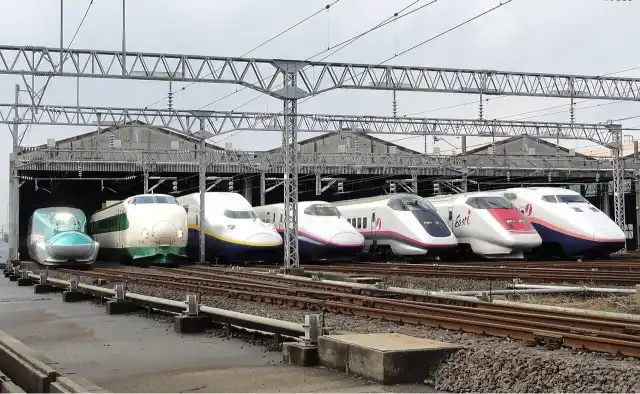
India’s Mumbai–Ahmedabad High-Speed Rail Corridor, the country’s first bullet train project, is showcasing a series of engineering breakthroughs that are setting new standards for rail infrastructure. Built with Japanese Shinkansen technology, the project is designed to deliver world-class speed, safety, and passenger comfort while transforming intercity travel.
Among its biggest engineering achievements is India’s first undersea rail tunnel, a 21-kilometre tunnel that includes an approximately 7-kilometre section beneath the Arabian Sea. The corridor also features advanced earthquake detection systems, allowing trains to stop automatically during seismic activity, significantly enhancing passenger safety.
The high-speed corridor includes major river bridges, elevated viaducts, dedicated high-speed tracks, and modern stations built to international standards. Precision engineering, advanced construction methods, and state-of-the-art signalling systems are being used throughout the project to support train speeds of up to 320 km/h.
Once completed, the Mumbai–Ahmedabad Bullet Train is expected to cut travel time between the two cities to around two hours, boosting connectivity, economic activity, and regional development. The project is also helping India build expertise in high-speed rail technology and large-scale infrastructure execution.
