


India has achieved a significant clean energy milestone by commissioning the country’s first and deepest geothermal wells in Ladakh’s Puga Valley, marking a major step toward harnessing geothermal energy for electricity generation.
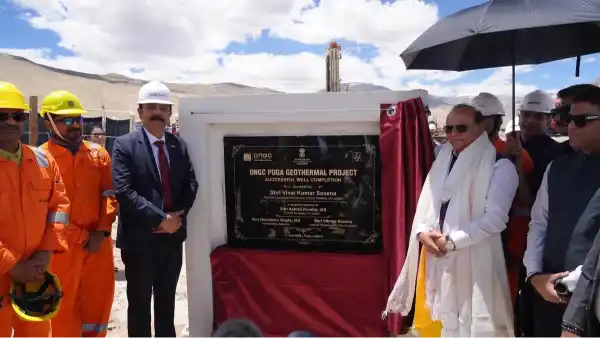
Lieutenant Governor of Ladakh V K Saxena inaugurated the two geothermal wells, each drilled to a depth of 1,000 metres at an altitude of over 14,000 feet. The project is being implemented by the ONGC Energy Centre and will support India’s first demonstration-scale 1 MW geothermal power project.
Officials said the wells are crucial for evaluating geothermal reservoirs, planning the power plant and enabling future commercial development of geothermal energy in the region.
Boost for Clean Energy
The Puga geothermal project is expected to play a key role in transforming Ladakh into a clean energy hub while supporting India’s long-term net-zero ambitions.
Speaking at the commissioning, Saxena said the achievement would serve as a blueprint for India’s clean energy transition and contribute significantly to making Ladakh a carbon-neutral and environmentally sustainable region.
High-Altitude Engineering Achievement
Project engineers said temperatures of up to 135°C have already been recorded at a depth of around 400 metres, with further testing underway to identify higher geothermal temperatures required for power generation.
Despite challenging geological conditions, geothermal activity and the extreme high-altitude environment, the first well reached its target depth on May 22, 2026. The second well was completed on July 8 after drilling began on June 3.
Project Back on Track
The geothermal project had previously faced delays after the expiry of a tripartite agreement involving the Ladakh administration, the Ladakh Autonomous Hill Development Council-Leh and the ONGC Energy Centre.
Following the renewal of the agreement for another five years, work resumed, allowing the project to move forward.
Once operational, the pilot plant is expected to demonstrate the commercial potential of geothermal energy in India and open new opportunities for sustainable, round-the-clock renewable power generation.
