


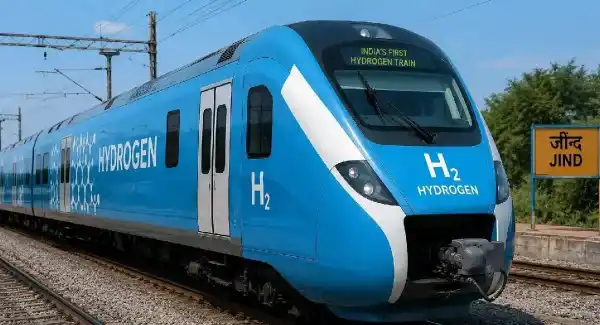
India’s first hydrogen-powered passenger train has entered service, marking a major milestone in the country’s shift towards cleaner transportation. The train is powered by a 1,200-kilowatt hydrogen fuel-cell propulsion system, which generates electricity by combining hydrogen with oxygen. Its only direct by-products are water vapour and heat, making it a zero-emission alternative to conventional diesel-powered trains.
The 10-car train has a passenger capacity of around 2,600 people and is designed to operate at a maximum approved speed of 75 kmph, with a design speed of up to 110 kmph. The train connects the Jind Junction, Gohana Junction and Sonipat sections in Haryana.
Safety is a key feature of the train’s design. The system includes technology to monitor hydrogen levels, detect leaks and respond to potential fire or overheating risks. Hydrogen fuel cells power the train’s electric motors, while batteries can help manage peak power requirements and regenerative braking.
The hydrogen train is being positioned as a major step in India’s green mobility ambitions. The project demonstrates how hydrogen fuel-cell technology can be used for rail transport, particularly on routes where full electrification may be more challenging. It also supports India’s wider push to develop indigenous clean-energy technologies and reduce dependence on fossil fuels.
