


India’s high-speed rail plans have received a major boost with the Centre approving seven bullet train corridors aimed at drastically reducing travel time between key cities and strengthening national rail connectivity.
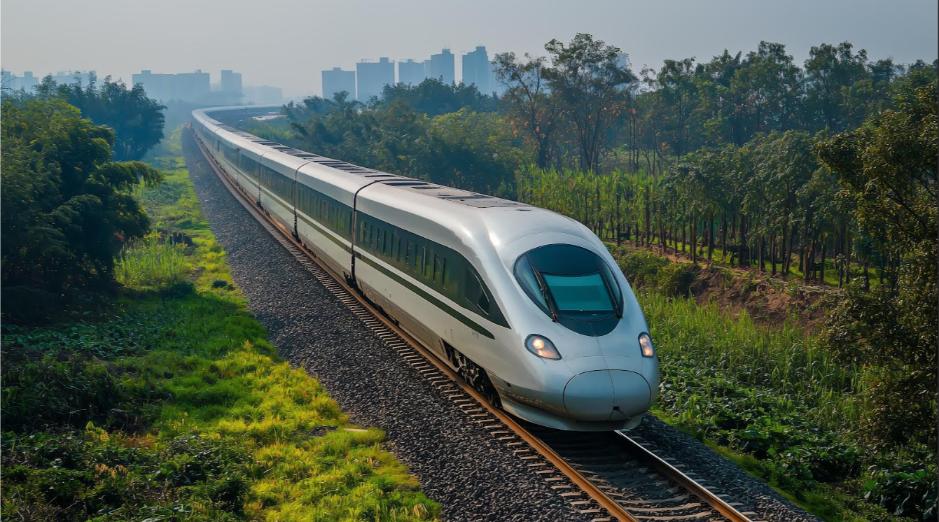
The proposed corridors include Mumbai–Ahmedabad, Mumbai–Pune, Bengaluru–Chennai, Bengaluru–Hyderabad, Pune–Hyderabad, Delhi–Lucknow, Delhi–Varanasi, Delhi–Siliguri, and the planned Delhi–Varanasi–Patna route, with future extension up to Siliguri also under consideration. Once completed, these routes are expected to reshape intercity travel with significantly reduced journey times.
Under the plan, Mumbai to Ahmedabad will take around 1 hour 57 minutes, Mumbai to Pune 48 minutes, Bengaluru to Chennai 73 minutes, Bengaluru to Hyderabad 2 hours 10 minutes, Pune to Hyderabad 2 hours 8 minutes, Delhi to Lucknow 2 hours, Delhi to Varanasi 3 hours 15 minutes, and Delhi to Siliguri about 6 hours.
The announcement comes amid the government’s broader push to expand high-speed rail infrastructure across the country. Earlier, Railway Minister Ashwini Vaishnaw and Bihar Chief Minister Samrat Choudhary inaugurated a new weekly train service between Chhapra Junction and Anand Vihar Terminal. On the same occasion, two additional services connecting Maul to Delhi and Zahirghat to Varanasi were also flagged off virtually.
Vaishnaw said Bihar alone will receive more than 200 new trains over the next seven to eight years as part of a large-scale railway expansion programme. He also noted that projects worth over ₹1.15 lakh crore are currently underway in the state, marking what he described as unprecedented growth in railway infrastructure.
The minister further confirmed that the Delhi–Varanasi–Patna bullet train corridor has been approved, which is expected to reduce travel time between Patna and Delhi to around 4 hours and 41 minutes once operational, with a possible extension to Siliguri in the future.
India’s first bullet train project, the Mumbai–Ahmedabad High-Speed Rail corridor, was launched in 2017 and is being developed with technical and financial assistance from Japan using the Shinkansen technology.
