


India’s car market is changing in a way that goes far beyond price. Owning a car is no longer only about buying new. A growing number of buyers are now choosing used cars on purpose, treating them as a smarter upgrade rather than a fallback option.
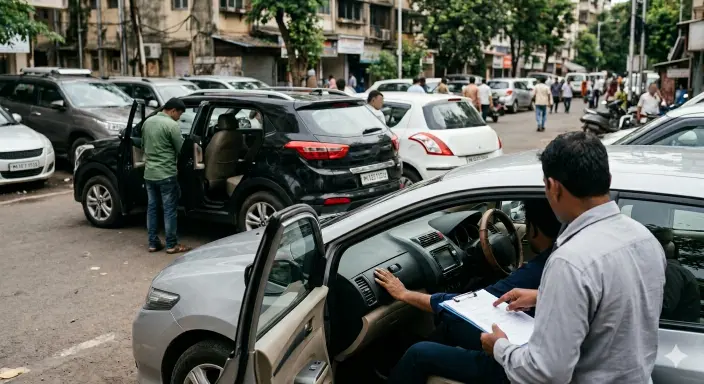
For years, the typical path was predictable. People would start with a small new hatchback, drive it for a few years, and then slowly move up to bigger vehicles. That pattern is weakening. Many buyers are now skipping the entry-level new car stage entirely and directly choosing used SUVs or higher variants that offer more space, features, and comfort at the same budget.
This shift is not small or temporary. Industry estimates suggest India’s used-car market could reach nearly $70 billion by FY31, with annual sales rising to around 9–10 million vehicles. If long-standing issues like trust, financing access, and standardisation improve, the market could grow at 15–20% annually.
From compromise to conscious choice
Used cars are no longer treated as something people settle for. Organised platforms such as Cars24 report that buyers now actively choose pre-owned vehicles because they come with inspections, warranties, easier financing, and more predictable ownership experiences.
A key change is who is buying. Nearly 65% of used-car buyers are first-time owners. For many of them, the real milestone is owning a car itself, not whether it is brand new.
A new ownership mindset is emerging
Experts say the used-car boom is not replacing new cars but creating a parallel route. Higher-income buyers are moving into used premium SUVs instead of entry-level new cars, while lower-income groups are turning to used hatchbacks as new vehicles become harder to afford.
The market is also splitting into clearer buyer types. Some want better models and upgrades, some prioritise convenience, others focus heavily on inspection quality, and many simply want the most affordable entry into ownership.
At the same time, vehicle ownership cycles are shortening. Cars are returning to the market faster, often within 4–5 years instead of the earlier 7–8 years. This is increasing the supply of relatively new and better-maintained used vehicles.
SUVs without the new-car price tag
A strong driver of this trend is aspiration without financial pressure. Buyers want SUVs, automatic gearboxes, connected features, and premium interiors, but they don’t want the full cost and depreciation that comes with new cars.
Used cars solve that gap. They can cost nearly 50–60% less than new vehicles while still delivering most of the features buyers want.
Many consumers also make this decision strategically. Instead of putting large sums into a new car, they prefer keeping money aside for investments, education, or family needs while still upgrading their lifestyle.
Trust remains the biggest barrier
Despite strong demand, trust continues to be the biggest challenge. A large portion of transactions still happens through unorganised dealers, where pricing is unclear, vehicle condition is inconsistent, and documentation is often weak.
This creates friction at every step, from negotiation to financing to ownership transfer. Buyers hesitate because they cannot fully verify what they are paying for.
Organised platforms are gaining ground because they offer inspections, warranties, standard pricing, and structured processes. The gap in customer confidence between organised and unorganised channels remains significant.
Platforms are reshaping the system
Companies like Cars24 are trying to control the entire journey, not just connect buyers and sellers. They handle pricing, inspection, financing, paperwork, and ownership transfer in one system.
Their pricing models are based on real transaction data rather than listings, and inspection systems improve continuously using feedback and performance data.
Financing is also evolving. Lenders are shifting from traditional credit-score-only models to systems that use transaction and vehicle data. This is making loans for used cars more accessible.
Financing is unlocking growth
Used-car loans were once difficult to get due to uncertainty around vehicle quality and resale value. That is changing quickly.
Loan penetration is expected to rise as digital systems improve risk assessment. Financing is becoming one of the strongest growth drivers because it turns interest into real buying power.
A full ecosystem is forming
As ownership cycles shorten, each car moves through multiple transactions over its lifetime. This is creating opportunities beyond buying and selling, including insurance, servicing, refurbishment, logistics, and resale.
The used-car space is slowly becoming a full ecosystem rather than a fragmented resale market.
Still, the market remains highly divided, with thousands of unorganised dealers operating across the country.
The core issue is friction, not demand
The key takeaway is simple. India does not lack demand in the used-car market. It lacks smooth experience.
People already want better cars. Financing is improving. Digital platforms are reducing information gaps. And aspirations are rising faster than incomes.
The real shift is not just toward used cars. It is toward making the experience simple and trustworthy enough that buyers stop seeing them as “used” and start seeing them as just smart ownership.
