


India has reached a new milestone in defence self-reliance with the indigenisation of main battery systems used in the Indian Navy’s Scorpene-class submarines. The batteries, earlier imported from Germany, are now being manufactured domestically by Exide Industries in collaboration with Mazagon Dock Shipbuilders Limited and the Indian Navy.
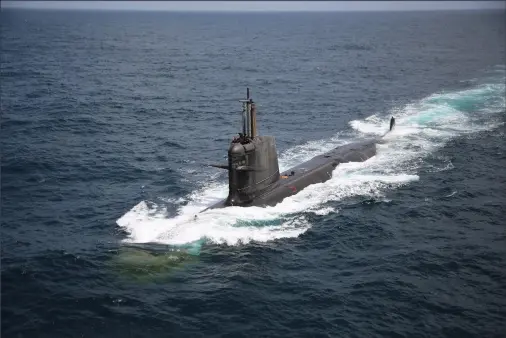
Initially, the first three submarines of this class used battery systems supplied by Germany’s Hagen Batteries. However, from the fourth submarine onwards, India shifted to locally produced systems developed by Exide Industries after sustained efforts to reduce dependence on foreign suppliers.
Submarine batteries are a highly critical component because they power the vessel when it operates underwater. In diesel-electric submarines, they are essential for propulsion, onboard systems, and maintaining stealth while submerged. Each Scorpene-class submarine uses around 360 battery cells as part of its main power system, making reliability and endurance extremely important for operational safety and combat performance.
The Scorpene submarines are built under Project-75 at Mazagon Dock Shipbuilders in partnership with France’s Naval Group. These vessels form a key part of India’s conventional submarine fleet, and their performance heavily depends on advanced battery systems that support long underwater missions.
Officials say reducing reliance on imported batteries is strategically important because such critical components were earlier sourced from a limited number of foreign suppliers. Dependence on imports often creates risks related to supply disruptions, maintenance delays, and higher lifecycle costs.
With domestic production now in place, India gains greater control over maintenance, faster replacement cycles, and improved supply stability, especially during emergencies or geopolitical tensions. The programme has also led to estimated foreign exchange savings of around ₹18.80 crore.
Submarine batteries must perform under extreme conditions, including deep discharge cycles, heat management, vibration resistance, and long-duration underwater operations. Ensuring consistent performance in such environments makes their design and manufacturing highly complex.
This development is also seen as part of India’s wider effort to build a self-reliant submarine ecosystem ahead of future programmes such as Project-75I. The country is also working on indigenising other key submarine systems like sonar, combat management systems, propulsion units, and electronic warfare equipment.
Looking ahead, the success of indigenous battery development is expected to support future advances in naval energy systems, including next-generation battery technologies and integration with Air Independent Propulsion (AIP) systems being developed by DRDO for upcoming submarines.
