


Prime Minister Narendra Modi on Sunday congratulated India’s nuclear scientists for achieving “first criticality” at the Prototype Fast Breeder Reactor in Kalpakkam, Tamil Nadu, calling it a historic milestone for the country’s energy journey.
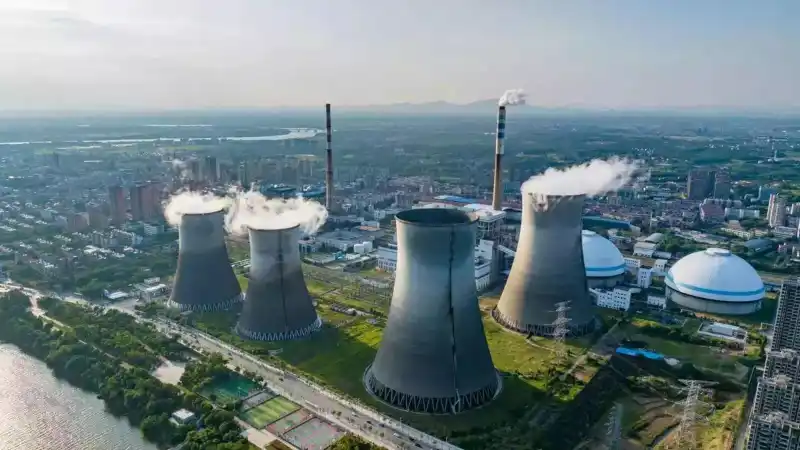
Speaking during the 133rd episode of Mann Ki Baat, he said the achievement marks the start of the reactor’s operational phase, where it begins a self-sustaining nuclear fission process. He highlighted that the reactor has been developed entirely using indigenous technology, calling it a major boost to India’s vision of Viksit Bharat.
The milestone was achieved after strict safety clearance from the Atomic Energy Regulatory Board and in the presence of senior officials from the Department of Atomic Energy, IGCAR, and BHAVINI.
According to the Department of Atomic Energy, the 500 MWe Prototype Fast Breeder Reactor achieved first criticality on 6 April 2026 at 8:25 PM, marking a key step forward in India’s nuclear energy programme and long-term energy security goals.
The reactor was designed by the Indira Gandhi Centre for Atomic Research and built by BHAVINI under the Department of Atomic Energy.
Fast Breeder Reactors are an important part of India’s nuclear strategy. Unlike conventional reactors, this system uses mixed oxide fuel containing uranium and plutonium. It is designed to generate more fissile material than it consumes by converting Uranium-238 into Plutonium-239 using fast neutrons.
In the long term, the reactor is also expected to support thorium utilisation, converting Thorium-232 into Uranium-233, which forms a key part of India’s future three-stage nuclear programme.
This technology acts as a bridge between current nuclear systems and future thorium-based reactors, helping India maximise its limited uranium resources while preparing for large-scale clean energy production.
The achievement also reflects the strength of India’s indigenous engineering and nuclear research ecosystem, featuring advanced safety systems, liquid sodium cooling technology, and a closed fuel cycle that improves efficiency and reduces nuclear waste.
