


Adani Green Energy Ltd is planning a major expansion in battery energy storage, with an investment of around ₹15,000 crore to add over 10 GWh of capacity in the current financial year. The move reflects the company’s growing focus on delivering reliable, dispatchable clean energy, according to PTI.
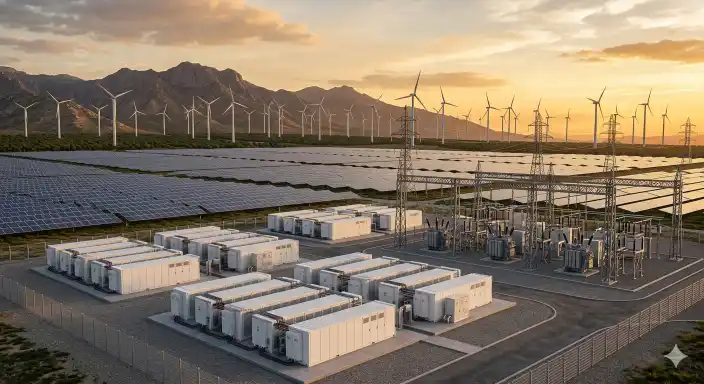
This planned addition comes on top of nearly 3 GWh of storage capacity expected soon, following 1.4 GWh commissioned in FY26. The systems are being developed alongside renewable projects at Khavda in Gujarat, which is set to become one of the world’s largest renewable energy parks.
The battery storage will play a key role in supplying electricity during peak evening demand, when solar generation drops, helping stabilize the grid and enable round-the-clock renewable power supply.
According to Sagar Adani, the company expects to commission over 10 GWh of new battery capacity this financial year. He also noted that installed capacity at Khavda is expected to reach around 3 GWh shortly.
Adani Green currently operates 19.3 GW of renewable energy capacity, making it the largest in India, and aims to scale this to 50 GW by FY30. Its portfolio is made up of solar, wind, and hybrid projects.
In FY26, the company generated 38 billion units of electricity, a 34% increase compared to the previous year.
About 75% of the upcoming battery capacity will be backed by long-term 25-year fixed tariff power purchase agreements, ensuring steady revenue visibility.
This expansion reflects a broader shift in India’s energy sector, where the focus is moving beyond capacity addition toward grid stability and dependable power supply. As renewable energy grows, battery storage is becoming essential for managing peak demand and balancing supply.
By scaling storage alongside generation, Adani Green is positioning itself in the next phase of India’s energy transition, where reliability and flexibility are as important as renewable capacity itself.
