


India is accelerating plans to transform Vizhinjam International Seaport into a major global maritime hub, leveraging disruptions in global shipping caused by the West Asian conflict.
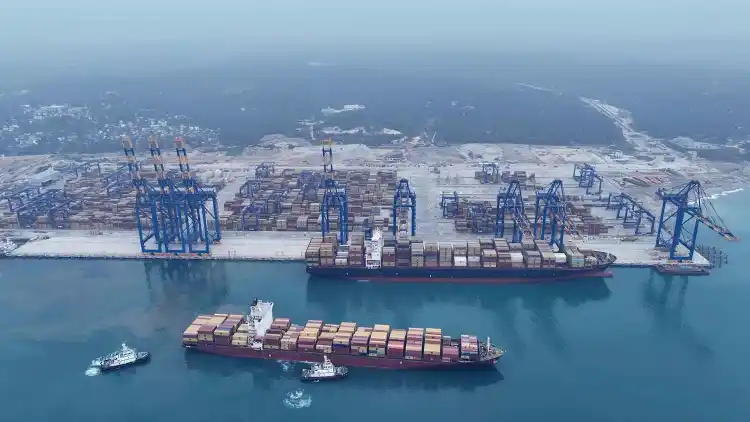
The move is part of the Centre’s Maritime Amritkal Vision 2047, aimed at strengthening India’s port infrastructure and reducing dependence on foreign transshipment hubs. The goal is to upgrade Vizhinjam’s existing transshipment terminal into a full-fledged global hub.
Strategically located along one of the world’s busiest shipping lanes, nearly 40% of global cargo traffic passes close to Vizhinjam, giving it a natural advantage. The government aims to position the port as a stable alternative to major hubs like Port of Singapore and Port of Dubai, especially during geopolitical disruptions.
The Prime Minister’s Office has directed the Union Ministry of Shipping to take forward the project, with initial discussions already completed involving state authorities and Vizhinjam International Seaport Limited.
Future plans include expanding the berth length from 2 km to at least 5 km to meet global standards, with private sector participation expected in the next phase. Alongside this, the port is likely to introduce bunkering facilities, free trade zones, and advanced logistics infrastructure to attract global shipping companies.
While the Adani Group is already a key player in the project, the Centre is expected to open doors for more private investors as part of a broader strategy to build a world-class maritime ecosystem.
With its strategic location and ambitious expansion plans, Vizhinjam is being positioned as India’s gateway to global maritime trade in an increasingly uncertain geopolitical environment.
