


India’s Commerce Minister Piyush Goyal has welcomed a new collaboration between Prada and Kolhapuri chappal artisans, highlighting the $1 billion export potential of these traditional handcrafted sandals. He praised the initiative, noting the intricate designs, comfort, and unique appeal of Kolhapuris, and said the partnership with Prada could turn the craft into a global luxury brand.
Following this announcement, Prada revealed plans to launch a limited-edition collection of sandals in India inspired by Kolhapuri footwear, priced at around €800 ($930) per pair, according to Prada executive Lorenzo Bertelli. The Italian luxury brand will produce 2,000 pairs in Maharashtra and Karnataka, combining local craftsmanship with Italian technology under agreements with state-backed artisan bodies.
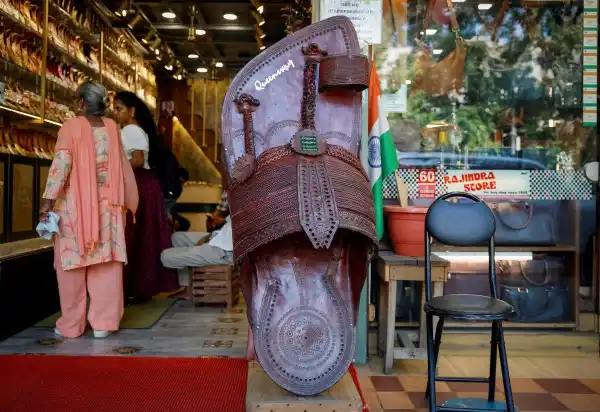
The collaboration comes after criticism six months ago when Prada showcased sandals resembling 12th-century Kolhapuri chappals at a Milan show, which drew outrage from Indian artisans and politicians. Prada later acknowledged the inspiration and began discussions with artisan groups for a more collaborative approach.
The initiative involves Sant Rohidas Leather Industries, Charmakar Development Corporation (LIDCOM), and Dr Babu Jagjivan Ram Leather Industries Development Corporation (LIDKAR), which promote India’s leather heritage. Bertelli said the project aims to raise awareness of Kolhapuri chappals and includes a three-year partnership with training programs in India and short residencies at Prada’s Academy in Italy.
Kolhapuri chappals, handcrafted by artisans from marginalized communities in Maharashtra and Karnataka, face declining demand and competition from cheap imitations. The collaboration seeks to increase artisan incomes, attract younger generations to the trade, and preserve traditional techniques. LIDCOM managing director Prerna Deshbhratar said Prada’s endorsement could create a “domino effect” that drives global demand. Bertelli added that the project and training program would cost several million euros, with artisans receiving fair compensation.
Prada, which opened its first beauty store in Delhi this year, has no immediate plans to expand retail operations or set up factories in India but may consider entry in the next three to five years. The Indian luxury market, currently valued at $7 billion, is expected to reach $30 billion by 2030. Prada prefers to enter India independently rather than through partnerships with large conglomerates.
A Prada technical team recently visited Kolhapur to study the traditional production process and meet artisans, cooperative heads, and stakeholders. Earlier this year, the brand faced criticism for pricing Kolhapuri-style sandals at ₹1.2 lakh without crediting the original crafters, prompting this more inclusive collaboration.
