


Prime Minister Narendra Modi spoke with US President Donald Trump on Thursday, with both leaders focusing on how to push their economic ties forward at a moment when negotiators on both sides are trying to wrap up talks on a trade agreement. Officials said the two leaders stressed the need to keep the momentum going on efforts to expand bilateral trade.
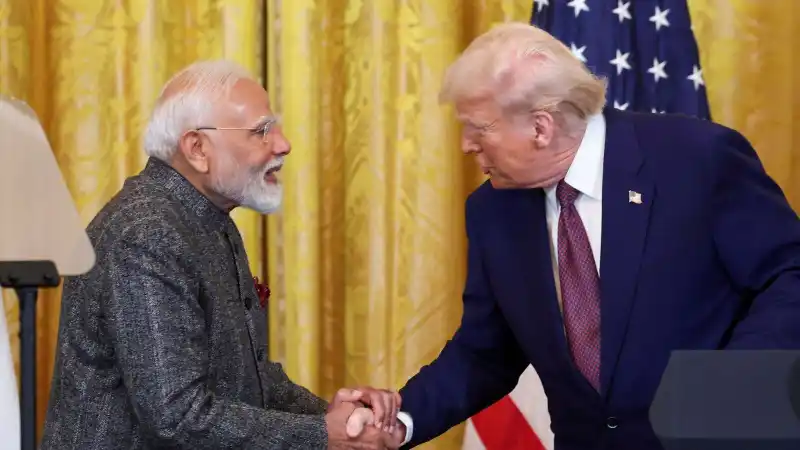
This was Modi’s first call with Trump since Russian President Vladimir Putin’s high-profile visit to Delhi, and their first conversation since Trump had phoned him on October 22 to wish him on Diwali.
They also talked about cooperation in energy and defence, especially the priority areas tied to the India-US COMPACT framework, which aims to boost military collaboration, trade, and technology partnerships. The discussion also touched on expanding work in critical tech areas.
Modi later described the call as warm and engaging. On X, he said they reviewed the state of their relationship, spoke about regional and global issues, and reaffirmed that India and the US will keep working together for peace, stability, and shared prosperity.
The call came just two days after the India-US Foreign Office Consultations in New Delhi, led by Foreign Secretary Vikram Misri and US Under Secretary of State Allison Hooker. Those talks covered trade and investment, defence cooperation, civil nuclear ties, technology, critical minerals, supply chain resilience, and the ongoing work under the TRUST and COMPACT initiatives. Meanwhile, Deputy US Trade Representative Rick Switzer has been in India to discuss tariff issues with Indian officials.
Even though the recent meetings and the Modi–Trump call suggest that the trade tensions between the two countries may be easing, Trump had earlier in the week indicated he might impose new tariffs on Indian rice over concerns of dumping.
During the call, both leaders agreed to stay closely aligned on shared challenges, reviewed progress in the Comprehensive Global Strategic Partnership, and noted that cooperation across sectors continues to strengthen. They also exchanged views on key regional and global developments and agreed to work together on common priorities.
