


India is preparing to take its indigenous Vande Bharat trains to international markets, with plans to begin exporting complete trainsets within the next three to four years. Railway Minister Ashwini Vaishnaw announced the target on November 1, 2026, during the flag-off ceremony of the Bengaluru–Mumbai Vande Bharat Sleeper Express.
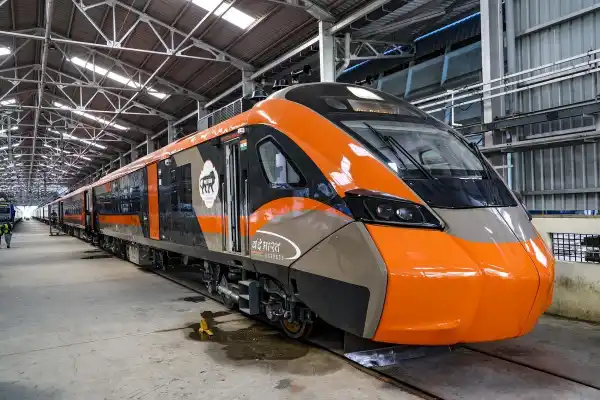
Vaishnaw said Indian Railways is continuously improving the trainsets with each new version, incorporating lessons from earlier models to enhance their design and performance. He added that India would move beyond exporting individual railway components to supplying complete trains to overseas markets.
India has already started exporting railway equipment, including propulsion systems and bogies, to countries such as Switzerland, Germany, France, Italy and the United States. According to information shared by the Railway Ministry in Parliament, Indian railway rolling stock and component exports reached approximately ₹26,000 crore between 2016–17 and January 2026.
India Prepares Vande Bharat for International Markets
The proposed exports are part of India’s broader effort to expand its railway manufacturing capabilities and strengthen its presence in global markets. Indian manufacturers currently produce locomotives, passenger coaches, traction motors, propulsion systems and other railway equipment for international customers.
Indian Railways and state-owned engineering consultancy RITES are also exploring opportunities to introduce Vande Bharat trains overseas. RITES is working on developing a standard-gauge version of the train, as the existing Vande Bharat services operate on broad-gauge tracks, while standard gauge is widely used across international railway networks.
Bengaluru–Mumbai Vande Bharat Sleeper Launched
Vaishnaw’s announcement coincided with the launch of the Bengaluru–Mumbai Vande Bharat Sleeper Express. The train will cover approximately 1,118 km in around 16 hours, reducing journey time by nearly eight hours compared with existing services on the route.
The fully air-conditioned train has 16 coaches and 823 berths across First AC, AC Two-Tier and AC Three-Tier categories. It includes improved facilities for passengers using middle and upper berths, along with advanced couplers designed to minimise jerks during travel.


Regular operations began from Mumbai on November 2, while the Bengaluru-originating service was scheduled to commence on November 3. The train will operate six days a week.
The proposed export of complete Vande Bharat trains could mark a new phase in India’s railway export journey, extending the country’s role from supplying individual components to offering complete passenger trainsets to international markets.
