


French energy company Engie plans to invest around €3 billion in India to increase its renewable energy portfolio from approximately 2 GW to 7 GW by 2030. The expansion reflects the company’s growing focus on India and highlights the infrastructure challenges involved in scaling up renewable energy.
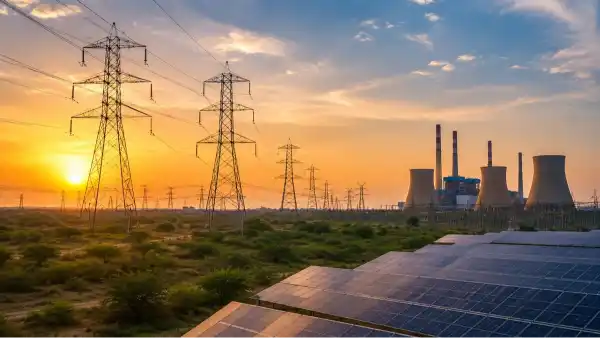
Engie aims to add around 1 GW of capacity each year, combining renewable energy projects with battery energy storage systems and exploring opportunities linked to data centres. CEO Catherine MacGregor said the company wants India to become one of its leading markets globally.
Engie’s Investment and Expansion Plans
The proposed investment is expected to be funded through a combination of debt and equity, although the final structure is still being worked out. Engie has also applied to establish a treasury operation at GIFT City in Gujarat to support project financing.
The company is strengthening its in-house capabilities in engineering, construction, operations and maintenance to manage projects more effectively. It is also open to acquisitions and other expansion opportunities to support its growth plans.
Engie currently has around 2 GW of renewable energy capacity in India, including projects under construction and in operation. Its target of reaching 7 GW by 2030 would significantly increase India’s importance within the company’s global portfolio.
Grid Connectivity and Land Access Remain Challenges
One of the key challenges facing Engie’s expansion is access to land and grid connectivity. According to MacGregor, some of the company’s projects are ready but are waiting for grid connections.
Renewable energy projects are often spread across different locations, unlike traditional power generation facilities concentrated in a few large centres. As more solar and other renewable projects come online, the electricity network must expand to connect them.
Delays in grid connectivity can prevent completed projects from supplying electricity, affecting revenue and project timelines. This makes transmission infrastructure and planning essential to India’s renewable energy growth.
Access to suitable land is another challenge, as developers must find locations that can support renewable energy projects and connect them to the power grid.
Battery Storage to Support Renewable Energy
Engie is also focusing on battery energy storage systems to improve the use of renewable electricity and address grid congestion.
Solar power generation is concentrated during daylight hours, which can put pressure on the grid when large amounts of electricity are produced at the same time. Battery storage can help store excess electricity and release it when demand rises or generation falls.
MacGregor noted that congestion during solar generation hours is a challenge, although it is not a major issue for Engie at present. The company’s storage plans align with India’s broader push to expand battery energy storage.
However, Engie has not yet announced specific storage capacity targets, project locations or detailed plans for integrating batteries into its renewable energy portfolio.
Data Centres Offer New Growth Opportunities
Alongside renewable energy and storage, Engie is exploring opportunities linked to data centres. These facilities require reliable electricity supplies, creating potential opportunities for energy companies that can combine renewable generation with storage solutions.
Engie’s strategy brings together renewable energy production, battery storage and emerging electricity demand. However, the company has not disclosed specific data centre projects or power supply agreements in India.
Engie Aims to Make India a Leading Market
Engie operates across several major markets, including France, the United Kingdom, Belgium and Brazil. India is currently a medium-sized market for the company, but the planned expansion is intended to increase its strategic importance.
The company aims to manage projects throughout their lifecycle, using experience from construction and operations to improve future project development and execution.
By strengthening its internal capabilities and exploring new investment opportunities, Engie hopes to deliver projects more efficiently and protect returns in an increasingly competitive renewable energy market.
Challenges Will Shape the 2030 Target
Engie’s plan to reach 7 GW of renewable energy capacity in India by 2030 represents a significant expansion ambition. However, achieving the target will depend on securing land, obtaining grid connections, completing projects on schedule and finalising the required financing.
Battery storage and new opportunities linked to data centres could support the company’s growth, but several details, including the final funding structure and project-level implementation plans, remain unconfirmed.
The expansion also highlights a broader challenge for India: building renewable energy capacity is only one part of the energy transition. Upgrading electricity networks, improving storage and ensuring new projects can reliably supply power will be equally important as renewable energy demand continues to grow.
