


India is moving towards developing a persistent underwater surveillance network in the Indian Ocean, with the Defence Research and Development Organisation (DRDO) seeking industry partners for its proposed Underwater Fibre Optic Sensing System (UFOSS). The initiative, known as Deep Ocean Watch, aims to connect seabed sensor nodes through fibre-optic cables to a shore-based receiving station in Kochi.
The project is being led by DRDO’s Naval Physical and Oceanographic Laboratory (NPOL), based in Kochi. An Expression of Interest issued in June 2026 seeks a lead system integrator to develop, supply, deploy and commission the network, along with the associated shore infrastructure. The current proposal deadline is October 27, 2026, following a revision to the original schedule.
Seabed Sensors to Monitor Strategic Waters
The proposed network is expected to cover strategically significant areas, including the Bay of Bengal, the Ninety East Ridge and waters around the Andaman and Nicobar Islands. These locations are important to maritime traffic and submarine movements between the Pacific and Indian Oceans.
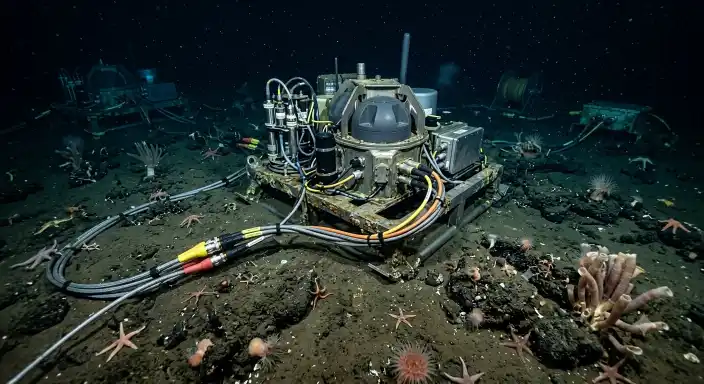
The system is intended to use underwater sensors and fibre-optic links to collect and transmit information for analysis onshore. Depending on the final design and capabilities, such sensors could help detect underwater acoustic signals and other environmental changes, supporting maritime situational awareness and anti-submarine warfare.
The network is also expected to include subsea cables, junction and branching units, and a connection to a shore station in Kochi, where incoming data can be processed.
A Long-Term Defence Infrastructure Project
The proposed contract covers development, installation, commissioning and operational support. The system is designed around a long-term service life, with the project description indicating a 20-year lifecycle and an estimated 48-month execution period.
The programme remains at the procurement and development stage. The Expression of Interest is intended to identify an industry partner; the final system configuration, deployment schedule and operational capabilities will depend on subsequent procurement and implementation decisions.
Strengthening India’s Underwater Awareness
Fixed seabed sensors could complement India’s existing maritime surveillance capabilities, including naval vessels, maritime patrol aircraft and sonar systems. Unlike mobile platforms, a fixed sensor network could monitor selected locations continuously, potentially providing early indications of underwater activity.
Countries including the United States have operated fixed underwater surveillance systems for decades. India’s proposed network reflects a broader effort to strengthen its ability to monitor strategic maritime approaches and improve coordination between underwater sensors and naval forces.
Beyond defence, persistent seabed monitoring may also contribute to oceanographic research and the observation of underwater environmental conditions. However, the proposed network should not be viewed as an operational system yet; its effectiveness will depend on deployment, sensor performance, data processing and integration with other surveillance assets.
