


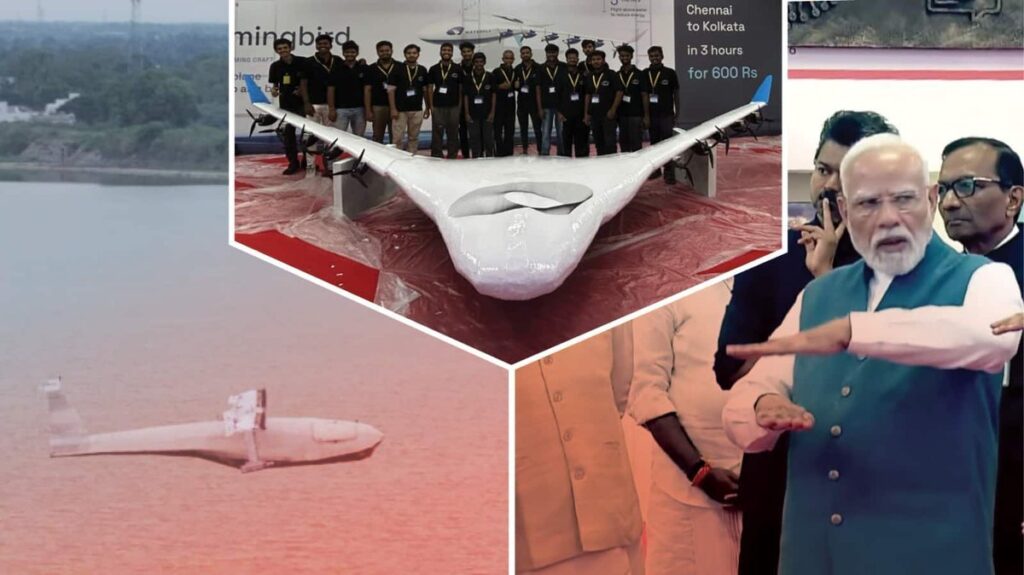
IIT Madras-incubated startup Waterfly Technologies is preparing for the first ocean trial of its electric-powered flying boat, Hummingbird, by December 2026. The planned trial between Chennai and Puducherry will test the craft’s performance in real marine conditions as the company works towards commercialising its technology for cargo transportation.
How the E-Flying Boat Works
Hummingbird uses Wing-in-Ground (WIG) technology, allowing the craft to travel close to the water’s surface by using an aerodynamic effect known as ground effect. This can reduce drag and improve aerodynamic efficiency compared with conventional flight.
The upcoming ocean trial will use a 300-kg craft that has already undergone testing at Kaveripakkam Lake in Tamil Nadu’s Ranipet district. The startup developed a smaller 30-kg prototype before scaling up to the larger version. The sea trial will help assess its performance in ocean conditions.
Cargo Transport as the Initial Focus
Waterfly plans to begin with coastal and island cargo routes, including logistics support for offshore oil fields. The company is also exploring a larger version capable of carrying a standard 20-foot shipping container, with Southeast Asia among its initial target markets.
According to the startup, the craft could cover around 1,000 km on a single charge, with charging stops of approximately 15 minutes. These are projected capabilities, and their commercial feasibility will depend on further testing and development.
Certification and Commercial Plans
The startup is in discussions with classification and certification agencies, including Bureau Veritas, to understand the requirements for commercial cargo operations. It is also manufacturing its technology in-house, with a facility in Sriperumbudur, Tamil Nadu.
The planned ocean trial is an important step towards evaluating the craft’s readiness for commercial use. If development and certification progress as planned, the technology could offer another option for coastal logistics and specialised cargo movement. However, commercial deployment will depend on successful testing, regulatory approvals and operational performance.
