


Radar superiority in modern air combat depends on mission profile—measured by signal strength, beam agility, detection range, or networked processing. Five iconic fighter jets illustrate these distinct radar capabilities.
The MiG-25 Foxbat uses brute force through its RP-25 Smerch-A (“Fox Fire”) radar. Built to hunt heavily jammed Cold War bombers, it transmits at a massive ~600 kW peak output—dwarfing modern AESA radars (20–40 kW). This extreme wattage provides high “burn-through” power to pierce enemy ECM jamming at immense distances.
The Su-35 Flanker focuses on long-range interception using its N035 IRBIS-E radar, targeting high-value assets like AWACS and tankers. It boasts a tracking range up to 400 km against a standard 3 m² RCS target. To achieve this, it uses a concentrated pencil beam, sacrificing field of view for extreme reach.
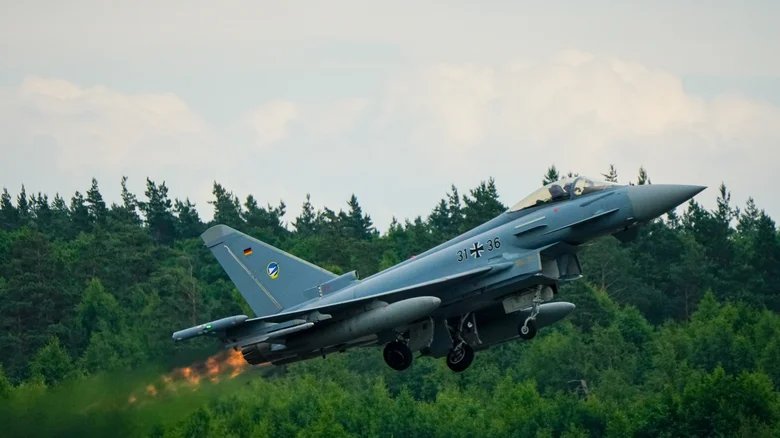
The Eurofighter Typhoon maximizes coverage with its Captor-E ECRS Mk2 radar. Combining electronic beam steering with a mechanical repositioner, it achieves a 200-degree field of view over roughly 200 km. This allows pilots to maintain target lock while performing sharp maneuvers during beyond-visual-range engagements.
The F-22 Raptor’s AN/APG-77 radar prioritizes stealth and detection, offering an estimated 200 km range against a 1 m² RCS target. Using Low Probability of Intercept (LPI) techniques, it frequency-hops thousands of times per second and dynamically adjusts output power to track targets without triggering enemy Radar Warning Receivers.
The F-35 Lightning II emphasizes sensor fusion via its AN/APG-81 radar. Operating as a networked data hub, it combines onboard data with off-board air, land, sea, and space feeds through datalinks like Link-16. Its strength relies on computing power rather than raw wattage, fusing electronic warfare and threat assessment for superior situational awareness.
