


A Parliamentary Standing Committee has urged the Railway Ministry to accelerate efforts to develop and manufacture high-speed rail components in India as the country prepares to expand its bullet train network.
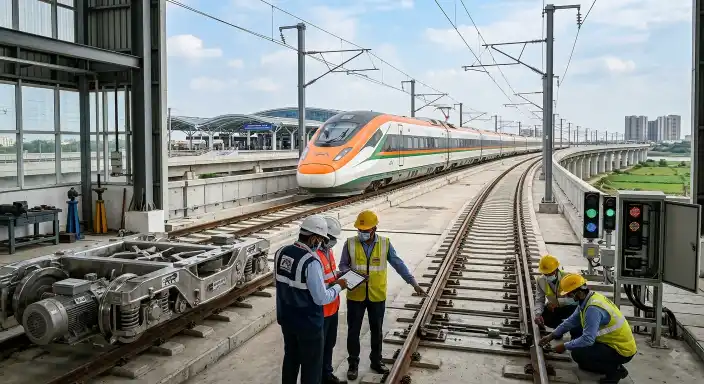
Focus On Indian Made High Speed Rail Components
In its latest report tabled in Parliament on August 10, the Standing Committee on Railways called for greater efforts to localise high-speed rail technology and build domestic manufacturing capabilities for critical components.
The panel also asked the Railways to study successful high-speed rail systems in other countries and apply relevant lessons while planning the seven new high-speed rail corridors announced in the Union Budget 2026-27.
Indigenous B28 Train Gets Committee Support
The committee welcomed the Railways’ development of the B28, an indigenous high-speed train designed to operate at speeds of up to 280 kmph.
The train is expected to begin operations on the 97-km Surat-Vapi section of the Mumbai-Ahmedabad High Speed Rail corridor in August 2027.
The panel has sought details from the Railway Ministry on steps being taken to speed up the indigenisation of high-speed rail components and strengthen domestic manufacturing capabilities.
Training With International Expertise
The committee also recommended expanding specialised training at the High-Speed Rail Training Institute in Vadodara.
It called for greater use of expertise from countries with established high-speed rail networks to improve training programmes and build specialised capabilities within India.
Seven New High Speed Rail Corridors
The seven proposed high-speed rail corridors are:
- Mumbai-Pune
- Pune-Hyderabad
- Hyderabad-Bengaluru
- Hyderabad-Chennai
- Chennai-Bengaluru
- Delhi-Varanasi
- Varanasi-Siliguri
Detailed project report updates are currently underway for four corridors, while preparations for the remaining three are progressing.
Push For Better Railway Infrastructure
The parliamentary panel also recommended introducing a performance framework for redeveloped railway stations. The framework would assess passenger usage, accessibility, cleanliness, maintenance and passenger feedback.
It further proposed a digital dashboard for multimodal cargo terminals to monitor capacity utilisation, rake turnaround time, mechanisation, connectivity, safety and customer satisfaction.
