


The race to lead Air India has narrowed to two internal heavyweights, with Nipun Aggarwal and Vinod Kannan emerging as the leading candidates for the top job, according to a report by the Financial Times. The decision, being closely watched within the Tata Group, comes at a critical moment for the airline as it navigates a difficult transformation phase.
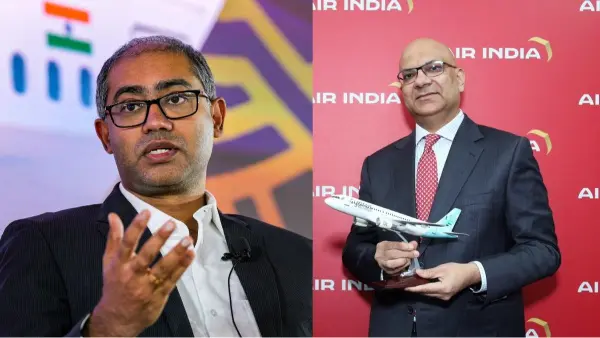
Aggarwal, currently Air India’s chief commercial officer, has played a central role in shaping the airline’s ongoing turnaround strategy. He is seen as a strong internal contender with deep involvement in the carrier’s restructuring and commercial planning.
Kannan, former CEO of Vistara, brings extensive operational experience and is widely respected in aviation circles. He led Vistara until its merger with Air India in 2024, giving him hands-on experience running a premium full-service airline.
Leadership Decision Still Unsettled
Despite the emerging shortlist, the final call remains uncertain. The Financial Times reports ongoing discussions within Tata Sons about both Air India’s leadership and broader questions around succession at the conglomerate level.
The selection process gained urgency after outgoing CEO Campbell Wilson announced his resignation in April. Sources cited in the report say Aggarwal and Kannan have since become the primary contenders.
Aggarwal is believed to have support from Tata Sons chairman N Chandrasekaran. However, Chandrasekaran is said to be treading carefully as internal discussions continue about his own tenure and future role within the group.
Debate Over Experience and Leadership Fit
Supporters of Aggarwal highlight his financial discipline and focus on operational efficiency. Critics, however, question whether he has the broader experience required to lead a global full-service airline.
Some within the industry argue that running a large international carrier demands a wider operational background beyond commercial strategy alone. That view has kept the competition open.
Kannan, on the other hand, is seen as more experienced in airline operations at scale. His leadership of Vistara is often cited as a key advantage, particularly during its growth phase and eventual merger.
Broader Uncertainty Within Tata Group
The leadership discussion at Air India is also linked to wider uncertainty around Tata Sons’ top management. Chandrasekaran’s term is scheduled to end in February 2027, with differing views reportedly emerging within the board on whether it should be extended.
These overlapping leadership questions have added complexity to Air India’s succession process.
Operational Pressures on Air India
The airline is currently facing multiple external challenges, including reduced flight capacity of up to 20 percent this year due to geopolitical tensions in West Asia and rising fuel costs. Restrictions from closed airspace over Pakistan have further increased operating pressure, with estimated annual losses reportedly nearing $600 million.
Air India is also dealing with the aftermath of the Boeing 787 Dreamliner crash in Ahmedabad last year, which claimed 260 lives. The final investigation report is still awaited.
Fleet Expansion and Financial Strain
Despite these setbacks, the airline continues with an ambitious expansion plan involving orders for 570 aircraft. However, global supply chain issues and delayed deliveries remain significant hurdles.
Singapore Airlines, which holds a 25 percent stake in Air India, has noted ongoing progress in refurbishment and fleet renewal, even as the airline reported losses of around $2.8 billion for the financial year ending March.
