


India is rapidly advancing its high-speed rail ambitions, including the Mumbai–Ahmedabad bullet train project, but one of its most memorable train experiences moves in the opposite direction, slowly, deliberately, and through breathtaking terrain.
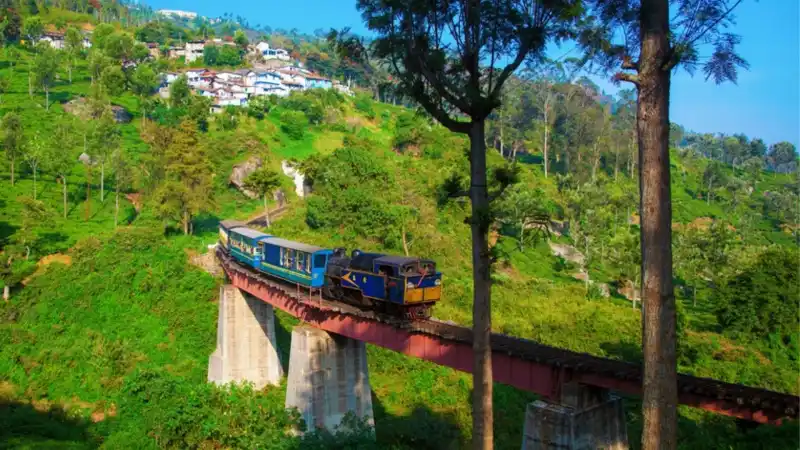
The Nilgiri Mountain Railway, connecting Mettupalayam and Ooty, is often described as the slowest train in the country. Travelling at an average speed of about 9 kmph, it takes nearly five hours to cover just 46 kilometres. Yet the slow pace is exactly what makes the journey special, offering uninterrupted views of misty hills, dense forests, tea plantations, and winding mountain tracks.
The route climbs steep gradients of the Nilgiri Hills using a unique rack-and-pinion system, designed to handle sharp curves and steep slopes. The line passes through around 16 tunnels, over 250 bridges, and more than 200 curves, making it one of the most technically remarkable mountain railways in India.
Recognised as part of the UNESCO World Heritage-listed Mountain Railways of India, the line was built in the early 20th century and remains a standout example of hill railway engineering.
The train also gained global attention after being featured in the iconic Bollywood song Chaiyya Chaiyya from the film Dil Se, which was filmed on top of a moving train.
Despite faster road connectivity to Ooty, many travellers still prefer this journey for its vintage wooden coaches, slow travel experience, and sweeping views of the Western Ghats. It offers a rare pause from modern speed, where the journey itself becomes the destination.
The best time to experience the Nilgiri Mountain Railway is between October and June, when the weather is pleasant and visibility is clear. Monsoon travel offers lush greenery and misty landscapes, though services can occasionally face delays due to heavy rain.
The journey begins at Mettupalayam, which is well connected by road, rail, and air via Coimbatore. From there, travellers ascend into the Nilgiris, moving gradually from plains to hill station landscapes that define the charm of this historic route.
