


The Indian Air Force has started the process of acquiring 150 next-generation advanced jet trainers as part of an effort to modernise the final stage of fighter pilot training before pilots move to operational combat squadrons.
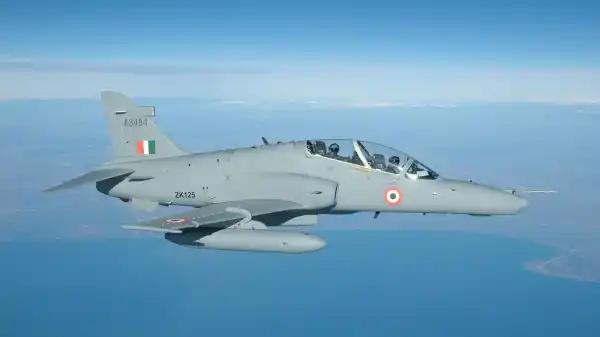
The IAF has issued a Request for Information (RFI), marking the first formal step in the procurement process. The proposed aircraft will serve as Stage-III trainers and are expected to eventually replace the Hawk Mk-132 fleet, which has been the mainstay of the IAF’s advanced fighter training programme since 2008.
New Trainers to Prepare Pilots for Modern Combat
Stage-III training is the final phase of the IAF’s fighter pilot training pipeline. At this stage, trainee pilots prepare for the operational environment they will face after being assigned to frontline aircraft such as the Sukhoi-30MKI, Rafale and Tejas.
The training will also prepare pilots for future combat platforms, including the Advanced Medium Combat Aircraft (AMCA). As a result, the new trainer is expected to provide capabilities and systems that are much closer to those found on modern fighter jets.
According to the RFI, the aircraft will need to support training in areas such as airborne radar operations, electronic warfare and the use of beyond-visual-range missiles. These requirements represent a significant increase in capability compared with the existing Hawk Mk-132.
Procurement Could Take Several Years
The RFI has been opened to both Indian and international manufacturers. The next major step will be the Request for Proposal (RFP), under which shortlisted companies will be invited to submit detailed technical and commercial bids.
The RFP is tentatively expected to be issued in December 2027. Once a contract is signed, deliveries are expected to be completed within 60 months. Based on the current timeline, the first aircraft could reach an IAF training base only in the mid-2030s.
Aircraft that meet the technical requirements will undergo field trials in India before the final selection. The contract is expected to be awarded to the lowest technically compliant bidder under the stated procurement process.
What the IAF Wants
The IAF is looking for a significantly more advanced aircraft than the Hawk Mk-132. The new trainer is expected to feature fly-by-wire flight controls and a modern glass cockpit with configurable hands-on-throttle-and-stick controls.
The aircraft will also need advanced navigation capabilities, including integration with India’s NavIC satellite navigation system as well as GPS and GLONASS.
Safety is another key requirement. The trainer is expected to have zero-zero ejection seats, allowing pilots to eject even when the aircraft is stationary or flying at very low altitude.
The IAF also wants strong flight-control and recovery capabilities. The aircraft should be resistant to loss of controlled flight and should be capable of automatically returning to controlled flight if the pilot releases the controls. These features are particularly important for advanced training, where pilots are introduced to more demanding manoeuvres and complex systems.
Indian Manufacturing to Play Key Role
Domestic production is expected to be an important part of the programme. Foreign manufacturers participating in the competition will need to explain how much manufacturing, technology transfer and supply-chain activity they can establish in India.
Hindustan Aeronautics Limited is expected to be a major Indian contender. Potential international participants could include Italy’s Leonardo, Korea Aerospace Industries, Boeing and Russia’s Yak.
Other Aircraft in the IAF Training Programme
The IAF’s existing training system also includes the HJT-36, which was renamed Yashas at Aero India 2025. The aircraft has been under development for nearly two decades and has undergone extensive modifications to improve its handling characteristics.
HAL has also proposed the HLFT-42, a supersonic lead-in fighter trainer that could eventually serve as a successor to the Hawk. The aircraft was displayed as a scale model at Aero India 2023 but has yet to reach the critical design review stage.
The planned acquisition of 150 advanced jet trainers reflects the IAF’s efforts to bring pilot training in line with the changing requirements of modern air combat. With fighter operations increasingly relying on advanced sensors, electronic warfare, network-centric capabilities and long-range weapons, the final stage of pilot training is becoming more sophisticated.
The new Stage-III trainer is intended to provide that crucial bridge, giving future fighter pilots experience with modern systems and combat concepts before they move on to current and next-generation frontline aircraft.
