


The Reserve Bank of India (RBI) is revisiting the idea of introducing polymer-based banknotes to address the sharp increase in demand for currency in recent years.
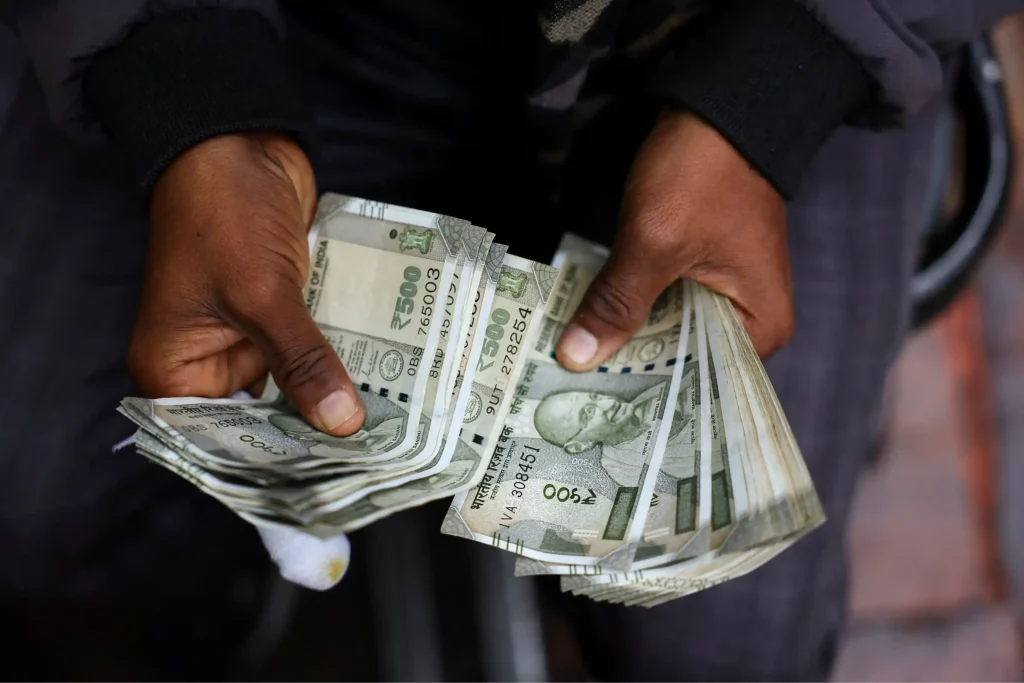
According to sources familiar with the discussions, the proposal was examined during recent central board meetings held in Patna and Mumbai. The move is being considered mainly for its potential benefits in cost efficiency and longer durability compared to traditional paper notes. A pilot project involving plastic banknotes for public circulation is expected to be announced soon.
Officials noted that polymer notes offer lower production costs over time and significantly higher shelf life. They can also be integrated with existing ATM systems, which are already capable of handling such currency formats. One source involved in the discussions said the central bank now has the technical readiness to support widespread use.
RBI data shows that expenditure on printing currency rose to ₹6,372.8 crore in FY25, up from ₹5,101.4 crore in the previous year, driven by higher demand for banknotes.
At the same time, currency in circulation has continued to rise sharply, reaching a record ₹42.86 trillion as of mid-May. This reflects sustained public demand for cash even as digital payments grow rapidly.
The central bank is also grappling with the increasing cost and environmental burden of managing soiled notes. In FY25 alone, 23.8 billion pieces of damaged currency were destroyed, a 12.3 percent rise from the previous year. Most of these were ₹500 notes, followed by ₹100 notes.
Lower denomination currency remains in high demand, especially ₹10 and ₹20 notes, though their share in total circulation remains small. The ₹10 note accounts for about 0.7 percent of total value, while the ₹20 note stands at 0.8 percent.
Earlier efforts to encourage the use of coins saw limited success, even though coin supply increased from 1.2 billion units in FY24 to 1.5 billion in FY25. The ₹5 coin made up the largest share, followed by ₹20 coins.
India had previously tested polymer notes in 2012 with a pilot project for ₹10 notes across select cities, but the initiative was shelved due to technical constraints. Officials now say those limitations have largely been resolved, including improvements in ATM compatibility.
Globally, around 60 countries have adopted polymer banknotes. Australia was the first to introduce them in 1988, followed by countries such as Singapore, Malaysia, Indonesia, Thailand, and Canada. Romania became the first European country to adopt them in 1998. In contrast, US currency continues to use a cotton-linen blend material.
