


Indian private space startup Agnikul Cosmos is moving closer to commercial rocket launch operations after successfully completing a major propulsion milestone involving clustered semi-cryogenic rocket engines. The company recently test-fired four 3D-printed Agnilet rocket engines simultaneously, marking a major step toward qualifying its modular Agnibaan launch vehicle for future commercial missions.
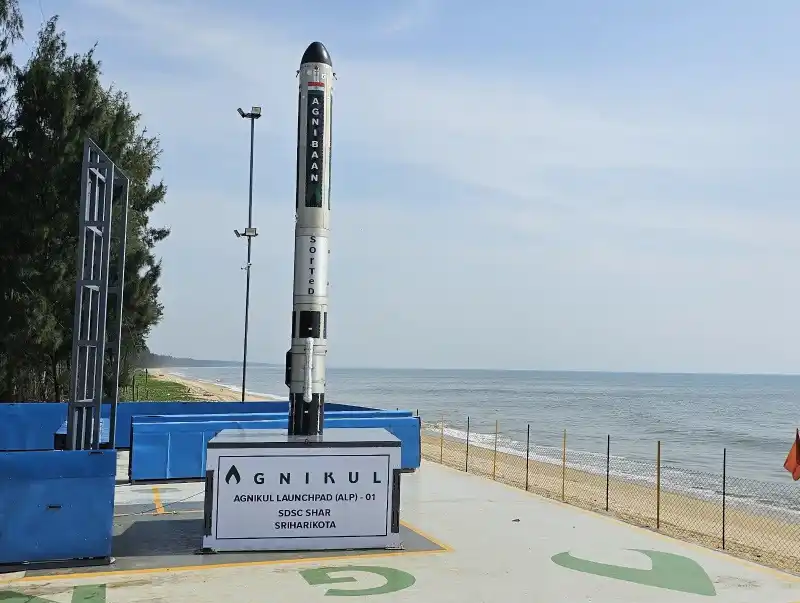
The achievement is considered significant because clustered engine firing is a critical capability required for orbital rocket launches. Agnikul’s modular rocket design allows different engine configurations depending on payload requirements, potentially helping reduce launch costs and improve flexibility for small satellite missions.
Founded by IIT Madras alumni, Agnikul has emerged as one of India’s leading private space-tech startups. The company gained global attention after launching the world’s first rocket powered by a fully 3D-printed single-piece engine during its suborbital Agnibaan SOrTeD mission in 2024.
The startup has also developed India’s first private launchpad at Sriharikota and is building indigenous launch technologies focused on rapid manufacturing and affordable satellite deployment. Its 3D-printing approach significantly reduces rocket engine production time from months to days, improving launch readiness for commercial customers.
Analysts say Agnikul’s progress highlights the rapid rise of India’s private space ecosystem as startups increasingly compete in small satellite launches, reusable technologies, propulsion systems, and space infrastructure. India’s growing commercial space sector is expected to play a major role in the global small satellite economy over the coming decade.
