


Civil Aviation Minister K. Ram Mohan Naidu has stressed that India urgently requires at least five airlines operating around 100 aircraft each to prevent future aviation crises like the recent disruption caused by IndiGo. He described the incident as a “structural warning,” noting that relying on one or two dominant carriers leaves passengers vulnerable.
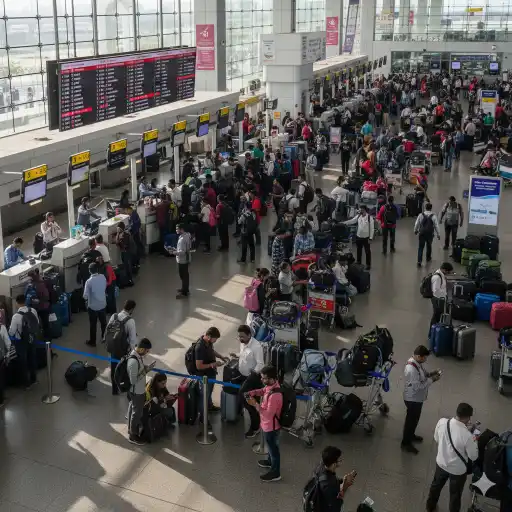
Naidu attributed the chaos, which stranded thousands of travelers, to serious mismanagement within IndiGo, citing errors in crew rosters and internal operational failures. Speaking to India Today’s Rajdeep Sardesai, he said the airline itself was solely responsible for the collapse of its network.
Despite ongoing communication with IndiGo, the minister said leadership has yet to adequately address public concerns. “The IndiGo chairman has not answered many questions in his video on Wednesday,” Naidu remarked, signaling the government’s dissatisfaction with the airline’s explanations.
The ministry is reviewing all aspects of the crisis, including potential price gouging, after fares on alternative flights surged when IndiGo’s operations were disrupted. Officials are also assessing whether the travel vouchers provided by IndiGo were sufficient and whether other carriers engaged in unfair pricing during the situation.
Responding to criticism over the delayed cap on airfares, Naidu said the government needed time to evaluate the situation before acting. When asked about removing the CEO of a private airline, he acknowledged legal and procedural limitations but said action could be considered if evidence of serious lapses emerges.
“If it is established that negligence or managerial failure caused the crisis, action must be examined in the interest of the public,” he stated. “When everything collapses in a single day, who is accountable?”
Framing the incident as a turning point, Naidu emphasized the need to reduce market concentration. “We need at least five airlines with around 100 aircraft each so that the country is not dependent on one or two carriers. This is essential to avoid monopoly and duopoly.”
