


Guntur headquartered electric air mobility startup Magnumwings is preparing for its next phase of growth as it moves towards raising fresh capital and scaling up production of its human, cargo, and defence focused aircraft prototypes.
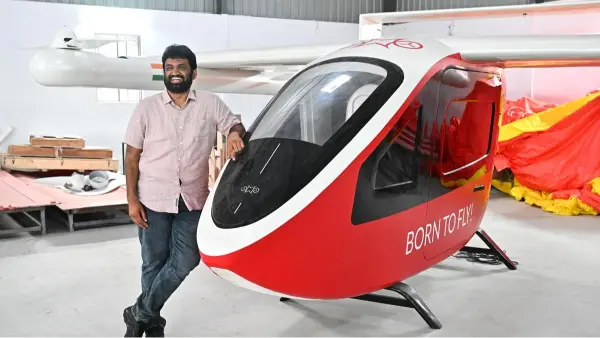
The nine year old company has developed six prototypes and is now aiming to shift from development to large scale manufacturing.
Founder outlines expansion and funding plans
Founder and Managing Director Abhiram Chava, an aerospace professional trained in the United States, said the company is planning a major infrastructure upgrade, including consolidation of its operations into a single 40,000 sq. ft. facility. He added that the expansion will require an estimated ₹200 crore investment over the coming months.
Until now, the company has been self funded, but it is now actively exploring funding from angel investors and private equity partners.
Possible location shift and government support
The startup is considering expanding either within Guntur or at the proposed Andhra Pradesh Aerospace and Defence Electronics Park in Palasamudram, which offers plug and play infrastructure and proximity to Bengaluru International Airport.
According to the founder, both central and state governments have provided strong support through regulatory approvals and land allocation, while the main requirement now is capital infusion.
Testing and certification underway
The company’s aircraft models are currently undergoing mandatory 10,000 hour testing cycles. Approvals are also in progress with major aviation regulators including the Directorate General of Civil Aviation (DGCA), Federal Aviation Administration (FAA), and European Union Aviation Safety Agency (EASA).
Most of the technology, including software, AI systems, and core hardware, has been developed in house, except for motors and propellers. The company currently employs around 60 people.
Future roadmap
Magnumwings plans to launch cargo focused air mobility vehicles by 2028, followed by passenger air taxi services in 2029 as it moves closer to commercial deployment in the emerging electric aviation sector.
