


Maharashtra is planning a major urban transformation with the development of Mumbai 3.0, Mumbai 4.0 and a redeveloped Dharavi, backed by an infrastructure investment target of $100 billion over the next five years. Chief Minister Devendra Fadnavis has outlined a vision to expand Mumbai’s economic geography through new business hubs, transport networks, port connectivity and modern urban infrastructure.
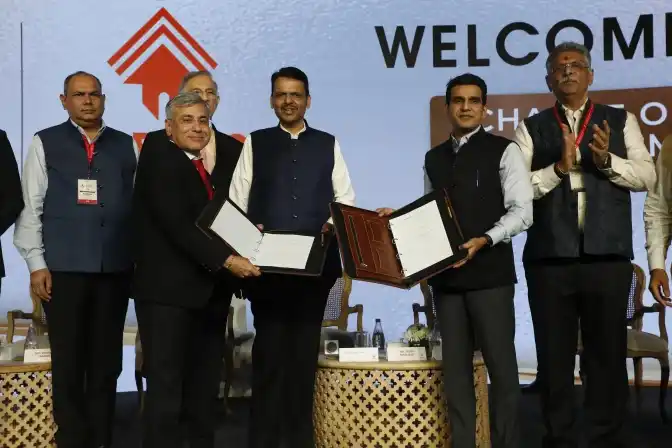
Of the proposed investment, around $50 billion is expected to be directed towards the Mumbai Metropolitan Region (MMR), strengthening its transport and civic infrastructure. Fadnavis shared the plans while addressing the Third World Mayors’ Forum in Mumbai on November 25, 2026.
Mumbai 3.0: Five New Business and Development Hubs
Mumbai 3.0 is planned around the Navi Mumbai International Airport, with five specialised hubs designed to create new economic and employment opportunities.
The proposed development includes:
- Edu-City: Designed to accommodate around one lakh students, with campuses of 12 international universities. Seven universities have already started operations.
- Sports City: A dedicated centre for sports infrastructure and related activities.
- Medi-City: Focused on healthcare facilities and medical services.
- Innovation City: Intended to support research, innovation and technology-driven businesses.
- GCC City: Planned as a destination for Global Capability Centres of multinational companies.
The development aims to create an integrated urban and business ecosystem around the new airport.
Mumbai 4.0 Around Vadhavan Port
The Maharashtra government is also planning Mumbai 4.0 along the Virar-Vadhavan belt in Palghar district. The proposed urban centre will develop around the upcoming Vadhavan Port, which is expected to become a major international maritime hub.
The region is planned to be connected to Mumbai through the bullet train and a super expressway. These links are expected to improve access to the port and support industrial, commercial and residential development.
Dharavi to Become Mumbai’s Next Business District
Dharavi’s redevelopment is another key part of the urban transformation plan. Fadnavis said the area could emerge as a major commercial centre within the next decade, complementing the existing Bandra-Kurla Complex (BKC) business district.
The redevelopment project aims to provide eligible residents with better housing and improved civic facilities while creating opportunities for commercial activity.
The proposed transformation could bring Dharavi into Mumbai’s expanding network of business districts and urban centres.
Mumbai Metro Network to Cross 300 Km
The infrastructure plan also includes expanding Mumbai’s metro network to more than 300 km, alongside investments in roads, flyovers, tunnels, water supply, sewage treatment and solid waste management.
Fadnavis highlighted the 22-km Atal Setu, which has reduced travel time between Mumbai and Navi Mumbai airport to around 40 minutes. The state aims to bring this journey down to approximately 30 minutes next year.
Maharashtra’s Larger Urban Growth Vision
The $100 billion investment target extends beyond Mumbai, covering infrastructure development and the redevelopment of cities such as Pune, Nagpur, Nashik and Chhatrapati Sambhajinagar.
Fadnavis said cities contribute around 65% of India’s GDP and stressed the importance of planned urbanisation, efficient transportation and improved civic services.
The proposed developments reflect Maharashtra’s strategy to create new economic centres while upgrading existing cities, positioning the Mumbai Metropolitan Region for further business expansion and investment.
