


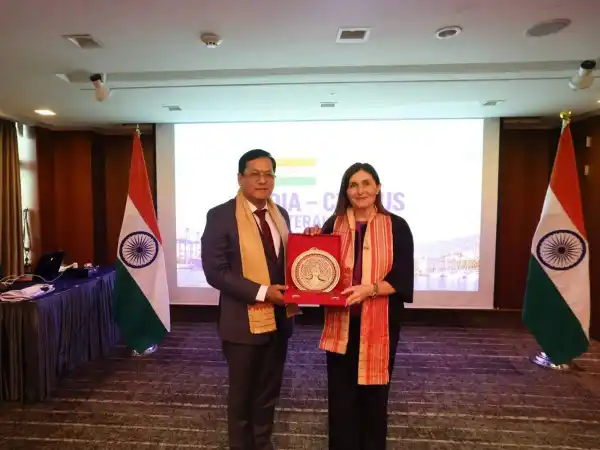
India is stepping up efforts to strengthen its shipbuilding industry through partnerships with South Korea, seeking advanced technology, investment and manufacturing expertise to build a globally competitive maritime sector. Union Minister for Ports, Shipping and Waterways Sarbananda Sonowal held discussions with South Korean shipbuilders, maritime institutions and industry leaders during a four-day visit to the country.
The initiative supports India’s ambition to become one of the world’s top five shipbuilding nations by 2047. The discussions cover shipyard development, marine equipment manufacturing, port infrastructure, maritime financing and sustainable shipping technologies.
India-South Korea Maritime Partnership
India and South Korea adopted the VOYAGES framework in April 2026 to strengthen cooperation in shipbuilding, shipping and maritime logistics. The partnership aims to combine South Korea’s advanced shipbuilding capabilities with India’s manufacturing potential, domestic vessel demand and expanding maritime infrastructure.
During his visit, Sonowal met Indian professionals working with major South Korean maritime companies, including Samsung Heavy Industries, Hanwha Ocean and HD Hyundai. He encouraged them to share their expertise with Indian shipyards, improve productivity and help develop a skilled workforce.
The government is also seeking collaboration in ship design, research, testing, certification, green propulsion and smart maritime technologies.
Thoothukudi Mega Shipyard Project
A major focus of the India-South Korea partnership is the proposed greenfield shipyard at Thoothukudi in Tamil Nadu. On October 28, Sonowal met HD Hyundai Chairman Chung Ki-sun in Seoul to discuss the project’s next steps.
HD Korea Shipbuilding & Offshore Engineering (HD KSOE), the shipbuilding arm of HD Hyundai, reiterated its intention to participate as the primary strategic investor. A joint working group will oversee project development, while the partners work towards finalising a joint venture structure and a detailed project report within six months.
The proposed shipyard is expected to have an annual capacity of around 2.5 million gross tonnes, subject to validation through the detailed project report. The project is envisaged as a major step towards expanding India’s commercial shipbuilding capabilities and attracting further investment into the maritime sector.
Focus on Marine Equipment and Technology Transfer
India is also exploring partnerships with South Korean companies to manufacture specialised marine equipment, including LPG and LNG cargo tanks, cryogenic structures and large shipbuilding blocks.
Cochin Shipyard Ltd has explored potential block-fabrication cooperation with South Korea’s Sejin Heavy Industries. The two countries are also discussing cooperation in marine equipment research, development, testing and certification through the Korea Marine Equipment Research Institute and the proposed India Ship Technology Centre.
These initiatives are expected to support domestic manufacturing, reduce reliance on overseas suppliers and help Indian-made marine equipment meet international standards. Technology transfer and workforce training are central to the broader cooperation strategy.
India’s Global Shipbuilding Ambitions
India’s maritime expansion is backed by government incentives, proposed shipbuilding clusters and growing demand for new vessels. According to the government, Indian public agencies are expected to require more than 400 vessels in the coming years, creating potential demand for domestic shipyards.
India is seeking to build an integrated maritime ecosystem covering shipbuilding, ship repair, marine equipment, port infrastructure and logistics. Partnerships with established international shipbuilders are expected to help bridge gaps in technology, production capacity and large-vessel construction.
South Korean expertise could play an important role in developing large commercial ships and specialised equipment in India. The success of these initiatives will depend on securing investment, finalising project structures, developing skilled workers and converting policy support into operational shipbuilding capacity.
