


India has launched its first locally developed vaccine against the H5N1 bird flu virus to protect chickens and support poultry farmers.
Union Agriculture Minister Shivraj Singh Chouhan unveiled the vaccine on November 20, 2026, at the ICAR-National Institute of High Security Animal Diseases in Bhopal, Madhya Pradesh.
The vaccine has been developed by Indian scientists and is expected to cost just ₹1 to ₹2 per dose.
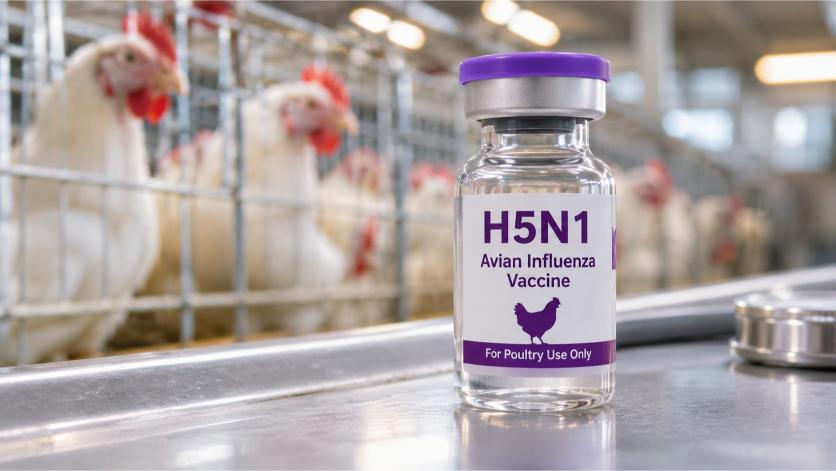
New Vaccine to Protect Chickens
The vaccine targets the H5N1 virus, which causes a dangerous form of bird flu.
Bird flu spreads among chickens and other birds and can lead to large numbers of deaths during outbreaks.
The new vaccine is designed to protect chickens against the H5N1 Clade 2.3.2.1a strain.
Chouhan said the development would help India strengthen bird flu prevention and reduce financial losses faced by poultry farmers.
Its low price could make it affordable even for small farmers.
India Has Faced Over 500 Bird Flu Outbreaks
According to the minister, India has reported more than 500 outbreaks of H5N1 and H5N8 bird flu since 2006.
The country’s first reported outbreak occurred in Navapur, Maharashtra, in 2006, when around 10 lakh chickens died.
In 2021, approximately nine lakh chickens died due to bird flu.
The minister also said around two lakh chickens had died in outbreaks during 2026.
Such outbreaks cause serious losses to poultry farmers and affect their regular income.
The new vaccine is expected to help reduce these risks.
₹300 Crore Laboratory Planned in Bhopal
During the launch, Chouhan also announced plans to establish a modern laboratory in Bhopal at a cost of ₹300 crore.
The facility is expected to strengthen research and development related to animal diseases.
He praised the scientists who developed the vaccine, saying they worked for several months under strict safety conditions.
The Bhopal institute has previously developed vaccines against diseases such as classical swine fever and African swine fever.
Supporting India’s Poultry Farmers
Chouhan said animal husbandry plays an important role in India’s rural economy by providing regular income to farmers.
He stated that animal husbandry contributes around 14% to the country’s GDP, while poultry accounts for about 1%.
The new vaccine is another step towards making India more self-reliant in animal healthcare.
With an expected price of ₹1 to ₹2 per dose, it could help poultry farmers protect their chickens, reduce losses and improve their livelihoods.
However, details about the vaccine’s wider availability and distribution have not yet been announced.
