


Hyundai Motor has crossed 50,000 cumulative hydrogen fuel cell vehicle sales in South Korea, marking a major milestone in its efforts to develop hydrogen-powered mobility. The automaker sold 50,262 hydrogen fuel cell vehicles in its domestic market through September 2026, around 13 years after launching the Tucson ix FCEV, its first mass-produced hydrogen vehicle, in 2013.
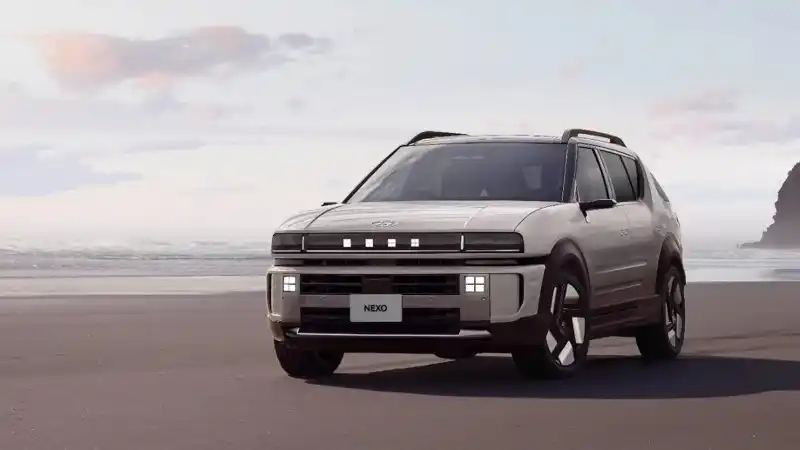
The growth reflects Hyundai’s expansion beyond passenger cars into commercial vehicles, including buses and heavy-duty trucks. Its Nexo hydrogen SUV, introduced in 2018, has played a significant role in building demand for fuel cell vehicles among individual customers.
Nexo Drives Hydrogen Vehicle Sales
Hyundai’s hydrogen vehicle portfolio includes the Nexo SUV, Elec City and Universe buses, and the Xcient heavy-duty truck. The Nexo has been a key driver of sales in the passenger vehicle segment, while growing demand for hydrogen-powered buses has supported adoption in commercial transport.
The latest Nexo model offers a driving range of up to 720 kilometres on a single hydrogen refill, an improvement over the previous model’s range of 609 kilometres. Hydrogen fuel cell vehicles generate electricity through a chemical reaction between hydrogen and oxygen, powering an electric motor. Their main advantages include relatively quick refuelling and potentially longer driving ranges compared with some battery-electric vehicles.
Hyundai’s cumulative domestic sales crossed 10,000 units in 2020, 20,000 in 2022 and 30,000 in 2023 before surpassing 50,000 this year. According to market research firm SNE Research, Hyundai accounted for around 70% of global hydrogen fuel cell vehicle sales in the first half of 2026.
Hydrogen Vehicles Support a Growing Supplier Network
The expansion of hydrogen mobility is also creating opportunities for automotive component manufacturers. A hydrogen fuel cell vehicle uses approximately 20,000 components, allowing suppliers with experience in precision machining, assembly and materials used in conventional vehicles to participate in the hydrogen vehicle supply chain.
More than 90% of the key components used in Hyundai’s Nexo are locally sourced in South Korea, supported by a network of more than 60 partner companies. The country’s hydrogen industry employed around 37,000 people across approximately 3,000 businesses in 2024, according to industry figures cited in South Korean reports.
Charging Infrastructure Remains a Challenge
Despite the sales milestone, hydrogen mobility continues to face infrastructure and policy challenges. South Korea has around 250 hydrogen refuelling stations, below the government’s earlier target of 310 stations by 2022. Difficulties in securing suitable locations and ensuring commercial viability have slowed the expansion of the network.
Subsidy implementation is another concern. Government support is split between national and local funding, and a lack of matching funds from local authorities can delay vehicle purchases and deliveries.
South Korea’s proposed 2027 budget reduces hydrogen fuel cell vehicle subsidies by around 23%, from 576.2 billion won to 445.7 billion won. Industry stakeholders have called for more effective subsidy allocation and coordinated investment in refuelling infrastructure to sustain growth.
Hyundai Continues to Bet on Hydrogen Mobility
Hyundai’s 50,000-vehicle milestone demonstrates the potential of hydrogen fuel cell technology in passenger and commercial transport. The company has continued to invest in fuel cell systems, hydrogen trucks and buses as it seeks to expand the technology’s role in lower-emission mobility.
However, the next phase of growth will depend on the availability of refuelling stations, effective government support and stronger demand across passenger and commercial segments. A balanced expansion of vehicles, infrastructure and the component supply chain will be essential for hydrogen mobility to move beyond its current niche.
