


Hyundai Motor India Limited (HMIL) plans to increase its annual production capacity to 1.14 million vehicles by 2030 as it expands its manufacturing operations and strengthens its presence in the Indian automobile market. The company also aims to increase component localisation from around 83% to 92% by 2032.
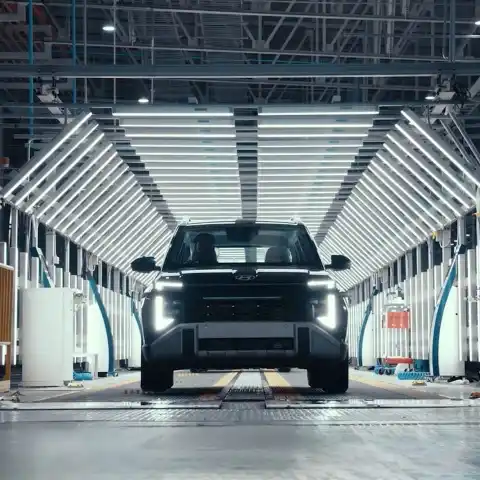
Hyundai Motor India Managing Director and CEO Tarun Garg announced the targets during the launch of the company’s new Bayon model. The expansion plans reflect the automaker’s focus on domestic demand, exports and a wider range of vehicle technologies.
The company currently has an installed annual production capacity of 994,000 vehicles. Its two Chennai plants account for 824,000 units, while the recently inaugurated Pune facility is planned to increase its capacity from 170,000 to 320,000 units by 2030.
Localisation Target Rises to 92% by 2032
Hyundai currently sources approximately 83% of its components locally at the Tier-1 supplier level, with more than 1,200 components localised through a network of around 200 Indian supplier partners.
The company plans to raise this share to 92% by 2032. Greater localisation could strengthen domestic supply chains, increase opportunities for Indian component manufacturers and reduce dependence on imported parts.
The strategy also supports Hyundai’s plans to expand production in India for both domestic sales and international markets.
Hyundai Expands SUV and Alternative-Fuel Portfolio
Hyundai plans to broaden its offerings across SUV segments while providing customers with more choices, including CNG, electric and hybrid powertrains.
The company expects these categories to play an important role in the next phase of India’s passenger vehicle market. It also plans to launch a mass-market compact electric SUV in India during the current financial year.
The Bayon is one of two new vehicle nameplates planned by Hyundai for the financial year, with the upcoming electric SUV forming the second. The Bayon starts at an ex-showroom price of ₹9.99 lakh and is positioned between the Venue and Creta in Hyundai’s SUV range.
Indian Passenger Vehicle Market Creates Growth Opportunities
India’s passenger vehicle market has expanded significantly over the past three decades. According to Garg, the market grew from 3.7 lakh vehicles in 1998 to an estimated 52.5 lakh vehicles in 2026.
He also highlighted the growth of SUVs, CNG vehicles and electric vehicles as important drivers of demand. The mid-size SUV segment, in particular, has expanded from 1.1 lakh units in 2015 to 8.7 lakh units in 2026, according to the company.
Hyundai has sold nearly 14 million vehicles from India, including around 10 million in the domestic market and four million through exports. Its capacity expansion, localisation targets and new product plans are intended to support further growth in India and strengthen the country’s role in Hyundai’s global manufacturing and export network.
