


The Indian Space Research Organisation (ISRO) is scheduled to launch its indigenous navigation satellite NVS-03 on October 30, 2026, aboard a GSLV Mk II rocket from the Satish Dhawan Space Centre in Sriharikota. The delayed mission is expected to strengthen India’s independent satellite navigation capabilities through the Navigation with Indian Constellation (NavIC) system.
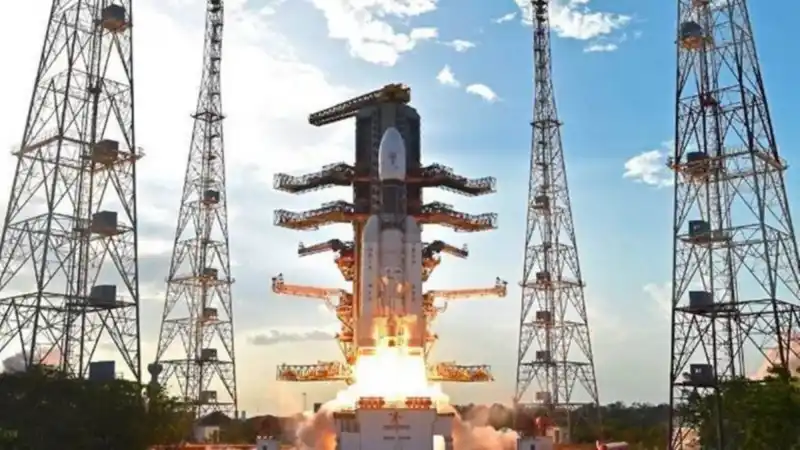
NVS-03 is part of the second generation of NavIC satellites, designed to improve the reliability and continuity of positioning, navigation and timing services across India and up to 1,500 km beyond its borders.
NavIC Satellite Network Needs Strengthening
The launch assumes importance following the failure of the NVS-02 satellite to reach its intended orbit after its launch in January 2025. The spacecraft’s orbit-raising manoeuvre could not be completed because of a problem in its propulsion system.
With only three operational satellites available for the constellation, NavIC’s standalone positioning service has been affected. A minimum of four operational satellites is required to provide independent positioning services. A successful NVS-03 mission could help restore this capability.
Applications Across Civilian and Strategic Sectors
NavIC provides positioning and timing information for a range of applications, including transportation, navigation, emergency services and infrastructure management. The system is also relevant to strategic operations that require reliable positioning data.
The technology is being integrated into applications such as real-time railway tracking, power-grid synchronisation, geographic tagging and compatible mobile devices. A stronger satellite constellation could improve the continuity and reliability of these services.
India’s Push for Navigation Independence
NavIC is a key part of India’s efforts to reduce dependence on foreign satellite navigation systems. Its services include an open signal for civilian users and a restricted service for authorised users.
ISRO is also developing the next satellites in the second-generation series, NVS-04 and NVS-05, to improve the system’s long-term reliability. The October 30 launch will therefore be an important step in strengthening India’s domestic navigation infrastructure.
