


The India-New Zealand Free Trade Agreement (FTA) came into force on October 20, 2026, opening new trade opportunities for exporters and businesses in both countries. Under the agreement, 100% of Indian merchandise exports receive duty-free access to the New Zealand market, removing tariffs of up to 10% on several product categories.
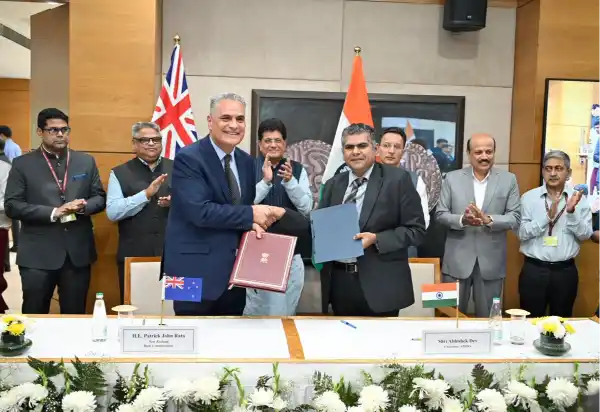
The agreement was signed on April 27, 2026, in New Delhi by India’s Commerce and Industry Minister Piyush Goyal and New Zealand’s Trade and Investment Minister Todd McClay. Its implementation follows the completion of ratification procedures in both countries.
Textiles, Engineering and Pharmaceuticals Among Beneficiaries
Indian sectors expected to benefit include textiles and apparel, leather and footwear, gems and jewellery, engineering goods, automobiles and auto components, chemicals, pharmaceuticals, agricultural products and processed foods.
The removal of tariffs is expected to improve the price competitiveness of Indian products in New Zealand and create opportunities for exporters, including micro, small and medium enterprises (MSMEs). Duty-free access for selected industrial inputs, including wooden logs, coking coal and metal waste and scrap, could also support Indian manufacturing supply chains.
The agreement also provides for cooperation in services and professional mobility. New Zealand has offered market access in around 118 services sectors, alongside commitments intended to create additional opportunities for Indian service providers and eligible professionals.
New Zealand Commits to Facilitate $20 Billion Investment
New Zealand has committed to facilitate $20 billion in investment into India over the next 15 years under the agreement. The investment commitment is intended to strengthen economic links and support opportunities across sectors in both markets.
India and New Zealand have also set an aspirational target of doubling bilateral trade in goods and services to NZ$7 billion, approximately ₹35,000 crore, by 2030. Achieving this target will require stronger business engagement, increased trade flows and sustained investment.
Tariff Concessions on New Zealand Imports
The agreement also reduces duties on selected goods entering India from New Zealand. Around 57% of New Zealand’s exports to India become tariff-free from the first day of implementation, while further concessions will be phased in over time. Some sensitive Indian agricultural products have been excluded from tariff concessions to protect domestic interests.
The agreement does not remove every import restriction or regulatory requirement. Products must meet the applicable rules of origin and other relevant standards to qualify for preferential tariff treatment.
The implementation of the FTA marks a new phase in India-New Zealand economic relations, with both countries seeking to expand market access, encourage investment and create fresh opportunities for businesses, exporters and service providers.
