


The Chenab Railway Bridge in Jammu and Kashmir is set to become a new tourist attraction, with a dedicated viewing deck and an engineering museum being developed near the structure. The facilities will allow visitors to appreciate the bridge’s scale, the surrounding Himalayan landscape and the engineering achievements behind its construction.
A Viewing Deck Above the Chenab River
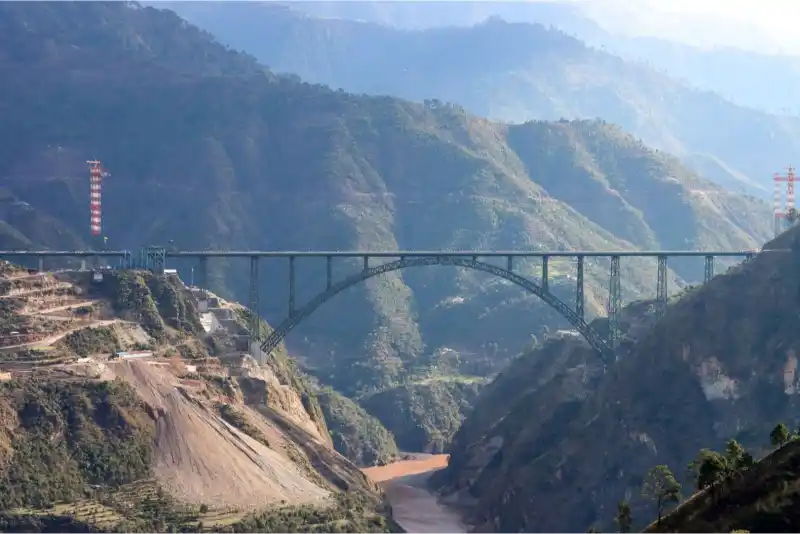
Located in Jammu and Kashmir’s Reasi district, the Chenab Railway Bridge stands 359 metres above the riverbed. The 1,315-metre-long structure is recognised as the world’s highest railway arch bridge, with a main steel arch spanning 467 metres.
The planned viewing deck will offer visitors a designated place to see the bridge, the Chenab River flowing through the deep gorge and the surrounding mountain scenery. It is also expected to provide a safer alternative to stopping at unauthorised roadside locations to take photographs.
Engineering Museum to Explain the Bridge’s Construction
An engineering museum is being developed alongside the viewing facility. It is expected to showcase the bridge’s design, construction stages and the challenges engineers faced while building across difficult mountainous terrain.
The proposed exhibits include construction photographs, bridge models and digital presentations explaining the technologies used to assemble the massive steel arch. The museum could also serve as an educational resource for engineering students, researchers and visitors interested in large infrastructure projects.
Building the bridge required specialised engineering methods to address the region’s steep terrain, geological complexity and seismic risks. Its construction was a major component of the Udhampur–Srinagar–Baramulla rail link, designed to improve rail connectivity to the Kashmir Valley.
Tourism and Local Economic Opportunities
The viewing deck and museum are intended to broaden the bridge’s role beyond railway transportation by presenting it as an attraction for domestic and international visitors. Increased tourist activity could benefit local transport operators, shops, restaurants and accommodation providers.
The facilities may also help visitors understand the bridge’s significance as part of India’s railway infrastructure development. However, the viewing deck and museum are still being developed, and visitors should check official updates for confirmed opening dates and access arrangements.
The project combines tourism with engineering education, giving visitors an opportunity to experience one of India’s most notable infrastructure achievements while exploring the natural landscape of Jammu and Kashmir.
