


In 2016, mobile data in India was expensive, limited and largely considered a luxury. With 1 GB of 3G data costing as much as ₹250, consumers routinely switched mobile data off to avoid exhausting their balances. India ranked just 155th globally in mobile data consumption.
Then came September 5, 2016.

Reliance Jio entered India’s telecom market with an unconventional strategy. Instead of upgrading legacy 2G and 3G networks, it built an all-IP, VoLTE-enabled 4G network from the ground up.
The scale of the ambition was unprecedented.
Jio crossed 50 million customers within 83 days and reached 100 million subscribers in just 170 days, triggering one of the most disruptive phases in India’s telecom history.

But Jio’s ambition was never limited to selling cheaper data. Its larger mission was to make digital connectivity accessible to every Indian and build an ecosystem where technology could become an enabler of opportunity, inclusion and economic participation.
That vision has increasingly shaped Jio’s product strategy.
From connectivity, Jio has expanded into devices, digital payments, entertainment, cloud computing and artificial intelligence. JioBharat, designed for users transitioning from legacy 2G networks, brings 4G connectivity and digital services to a mass-market audience. JioPC aims to make cloud-powered computing accessible by transforming existing computers into more capable, AI-ready machines without requiring users to purchase expensive new hardware.

The company has also been investing heavily in artificial intelligence through JioBrain, an indigenous AI platform designed to bring AI capabilities into businesses and telecom operations, including network optimisation.
These initiatives reflect a larger philosophy: technology should not remain concentrated in premium markets or among technologically advanced users. It should reach households, small businesses, students, street vendors, creators and entrepreneurs across India.
At the centre of this transformation has been Mukesh Ambani, whose decision to make a massive upfront bet on an all-4G network reshaped the competitive landscape of Indian telecom.
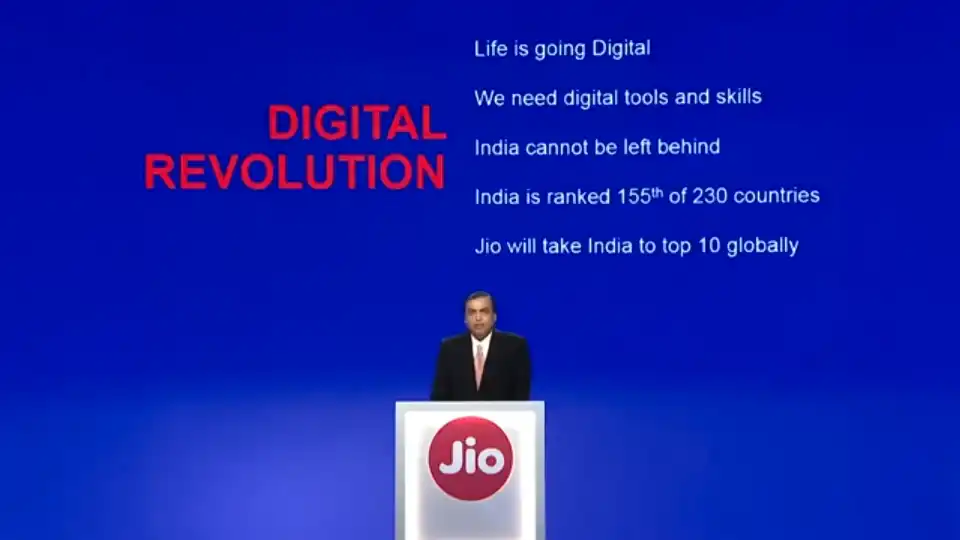
Ambani’s vision went beyond disrupting telecom pricing. He sought to build a technology ecosystem at national scale—combining connectivity, devices, digital platforms, payments, cloud infrastructure and AI. Building such an ecosystem in a market as diverse and complex as India required not only capital, but also long-term conviction, indigenous engineering and the willingness to operate at extraordinary scale.
For Mukesh Ambani and the Jio team, the strategy was clear: build infrastructure first, create scale rapidly and then build services around that digital foundation.
A decade later, the impact extends far beyond telecom.
Data prices have fallen dramatically, while smartphone adoption, digital payments, online education, streaming and the creator economy have expanded across urban and rural India. India has emerged as the world’s largest consumer of mobile data, while digital services have become deeply integrated into everyday economic life.
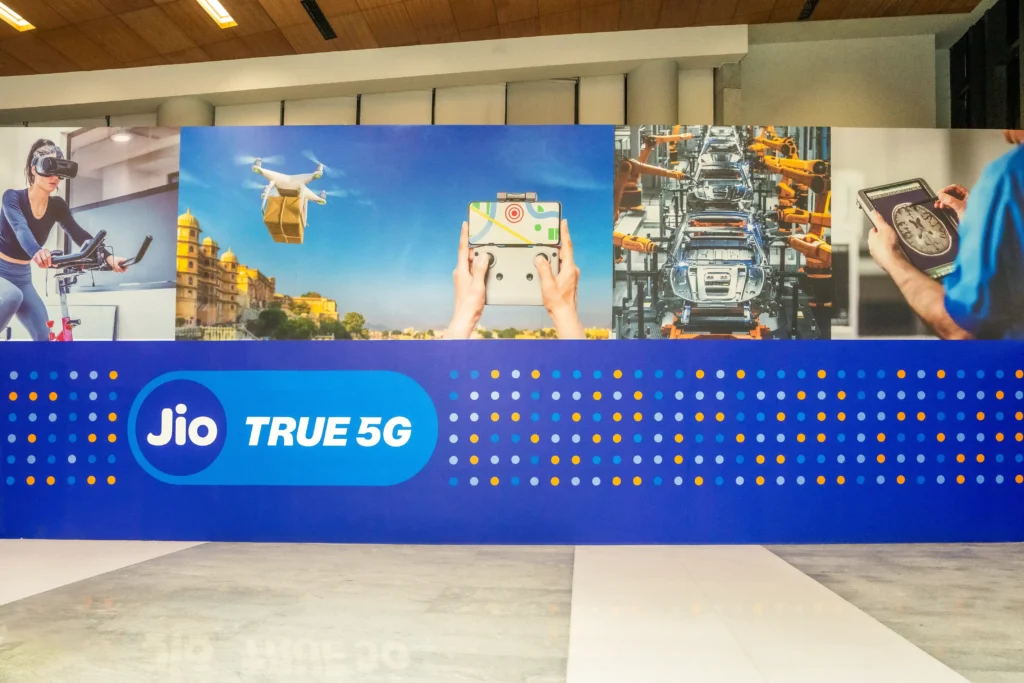
Jio’s evolution has continued from 4G to 5G, with the company building a large standalone 5G network and developing indigenous technologies across its telecom stack. Its infrastructure spans extensive fibre networks, telecom towers and subsea connectivity, creating the foundation for high-speed digital services across the country.
The company’s mission of digital inclusion is also visible in its approach to products. JioBharat focuses on bringing millions of legacy 2G users into the 4G ecosystem. JioPC addresses the computing gap by using cloud technology to extend the life and capabilities of existing hardware. JioBrain represents the next step—bringing artificial intelligence into the network and wider digital ecosystem.

Together, these initiatives point to a strategy much larger than telecom: connect people, provide affordable access, build indigenous technology and create an ecosystem of digital services around that connectivity.
For entrepreneurs and business leaders, Jio’s journey offers several lessons.
Scale over short-term margins. Build for millions rather than only the premium segment.
Solve real human problems. Affordable connectivity becomes powerful when it enables education, payments, commerce and livelihoods.
Own critical technology. Indigenous capabilities can create resilience and long-term strategic value.
Execute boldly. Jio’s original 4G bet demonstrated the impact of committing to a technology leap instead of gradually following the existing market.
What began on September 5, 2016, as a telecom disruption has evolved into one of India’s most consequential digital transformation stories.
Jio is no longer just a telecom operator. It has become a digital ecosystem spanning connectivity, devices, payments, entertainment, cloud and AI—and a major part of the infrastructure powering India’s digital economy.
From a time when Indians feared running out of a few hundred megabytes of expensive data to an era of always-on connectivity, India’s digital journey over the past decade has been extraordinary.
And at the heart of that transformation stands a simple but ambitious idea: make technology accessible at massive scale, and use it to create a more connected India.
