


Indian Railways’ One Station One Product (OSOP) initiative has become an important platform for local artisans, weavers, craftspeople and small producers to showcase and sell their products to a wider audience.
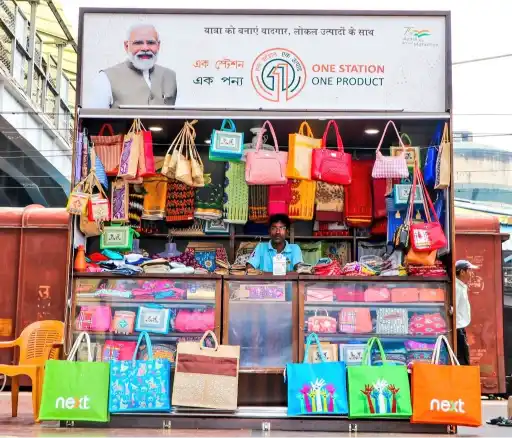
According to official data, more than 2,300 OSOP outlets are currently operating across over 2,000 railway stations in the country. The initiative has benefited more than 1.54 lakh people by connecting local producers with millions of railway passengers.
The scheme has generated sales of around Rs 162.39 crore so far, while nearly 1.5 lakh direct beneficiaries have received opportunities through the programme.
OSOP Turns Railway Stations Into Local Marketplaces
Launched on March 25, 2022, the One Station One Product scheme uses Indian Railways’ extensive network to create accessible marketplaces for regional and traditional products.
The initiative began with a 15-day pilot programme across 19 railway stations before being expanded nationwide. Under the scheme, stalls are allotted to producers on a rotational basis at nominal fees, allowing more small businesses and artisans to participate.
Products available through OSOP outlets include handicrafts, handloom products, textiles, toys, leather goods, jewellery, traditional items and regional food products.
Traditional Products Reach More Travellers
The scheme has also helped bring products closely linked to India’s cultural heritage to railway stations across the country.
These include Madhubani paintings and Bhagalpuri silk from Bihar, Gamosa and Mekhela Chador from Assam, Kota Doria and Sanganeri prints from Rajasthan, Channapatna toys from Karnataka, Kanchipuram silk from Tamil Nadu, Kolhapuri footwear from Maharashtra and Moradabad brassware from Uttar Pradesh.
By placing such products in high-footfall railway stations, OSOP gives regional artisans greater visibility while allowing travellers to discover traditional products from different parts of India.
West Bengal Leads in OSOP Outlets
State-wise data shows that West Bengal has the highest number of OSOP units, with 378 outlets.
Maharashtra follows with 205 units, while Tamil Nadu has 199 and Uttar Pradesh has 196.
The Railways has kept participation costs relatively low to make the programme accessible to small producers. Registration for a 15-day period costs between Rs 500 and Rs 1,000, depending on the category of the railway station.
Digital payment methods, including UPI, BHIM, POS machines and digital wallets, are also being encouraged at these outlets.
Boosting Grassroots Entrepreneurship
The growing OSOP network highlights the role public infrastructure can play in supporting local businesses and inclusive economic growth.
The initiative provides artisans and small producers with access to a large customer base while helping preserve traditional crafts, skills and regional products.
For travellers, the outlets offer more than just shopping opportunities. They provide a chance to discover products that reflect the culture and heritage of different parts of India.
As the scheme continues to expand, railway stations are increasingly becoming spaces where local entrepreneurship, traditional crafts, culture and commerce come together.
