


Prime Minister Narendra Modi has urged all political parties to work towards ensuring 33 per cent representation for women in the Lok Sabha and State Legislative Assemblies, saying greater participation of women in politics is essential for shaping India’s policies and governance.
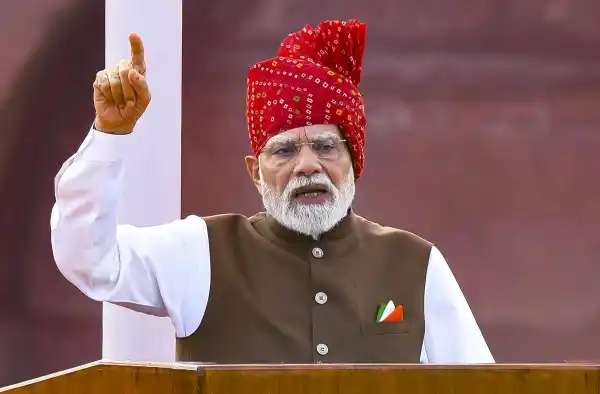
Addressing the nation from the Red Fort on India’s 80th Independence Day, Modi highlighted the growing contribution of women leaders in panchayats, municipalities and municipal corporations. He said women’s leadership at the grassroots level has shown their ability to address local issues, improve governance and support development.
The Prime Minister referred to the Nari Shakti Vandan Adhiniyam, passed by Parliament in 2023, which provides for one-third reservation for women in the Lok Sabha and State Assemblies. He said the legislation was aimed at taking women’s political representation beyond local bodies and into the country’s highest elected institutions.
Modi appealed to political parties to come forward and recognise the strength and capabilities of women. He called for faster action to ensure 33 per cent representation for women in Parliament and state legislatures, arguing that greater participation would give women a stronger role in deciding the country’s policies and future.
The Prime Minister also recalled that the demand for women’s political reservation had remained caught in political disagreements for nearly four decades. Although the 2023 legislation received overwhelming support in Parliament, its implementation was linked to the completion of a Census followed by delimitation.
The issue has remained a major point of disagreement between the government and Opposition parties. In April 2026, the government introduced constitutional amendments and a delimitation Bill aimed at putting the women’s reservation law into effect. Opposition parties said they supported the reservation but objected to connecting its implementation with delimitation. They also expressed concerns about the possible impact of constituency changes on southern states.
The Constitution (131st Amendment) Bill, 2026, which sought to facilitate the implementation of the women’s quota alongside delimitation changes, was defeated in the Lok Sabha on April 17. The Bill received 298 votes in favour and 230 against, falling short of the required two-thirds majority of the 528 members who voted.
The Nari Shakti Vandan Adhiniyam, passed in 2023, provides for 33 per cent reservation for women in the Lok Sabha and State Legislative Assemblies. However, because its implementation is tied to a Census and subsequent delimitation, the quota has not yet taken effect in Lok Sabha and Assembly elections.
Modi’s Independence Day appeal has once again brought women’s political representation into focus, with the Prime Minister calling on political parties to move towards greater participation of women in the country’s legislative institutions.
